
A good Barcelona local routine starts with one current, accessible place or activity that fits your actual week. Confirm its listing and any access, cost, or registration conditions, then return once before deciding whether it belongs in your routine.
At 8:40 on a Thursday morning, Marta stood outside a civic centre in Sant Antoni holding a paper coffee cup and a phone with three browser tabs open. She had moved to Barcelona recently, and the week already felt crowded with practical tasks. One appointment needed checking. A service provider had asked her to confirm something she did not fully understand. Her temporary accommodation was ending soon enough to make every unanswered message feel heavier.
She had chosen the activity because someone online described the neighbourhood as friendly. That was the wrong promise to carry into the morning. If the session was full, cancelled, too expensive, or difficult to reach from her flat, she would lose the only free hour she had before another appointment. More importantly, she might spend the rest of the week believing she had failed at settling in.
The activity listing was still current when she checked it. That small confirmation changed the task. Marta did not need to make Barcelona feel like home before lunch. She needed one place she could verify, reach, and visit again.
Choose one place that fits the actual week
A repeatable place has to work on an ordinary week, including the week when your inbox is full and your energy is low. Choose from a current public market, civic-centre activity, library-related space, neighbourhood class, or another public place that you can reasonably reach from where you live.
Start with your calendar rather than your ideal version of Barcelona. If Monday evenings are full, a Monday activity is not a useful routine. If you have a short break between work calls, choose somewhere you can enter without turning the visit into a major expedition. If you are still learning the city, a place near your actual neighbourhood may teach you more than a famous destination across town.
Your first choice should answer four practical questions:
- Can I reach this place using the time and transport options I already use?
- Does the activity or facility appear current?
- Can I return at a similar time?
- What happens if I arrive alone and leave without speaking to anyone?
That last question matters. A routine can support your adjustment without producing an instant friendship, invitation, or feeling of belonging. The useful outcome may be quieter. You know where the entrance is. You recognise the noticeboard. You learn which part of the building is open to the public. You have one less unknown to solve next week.
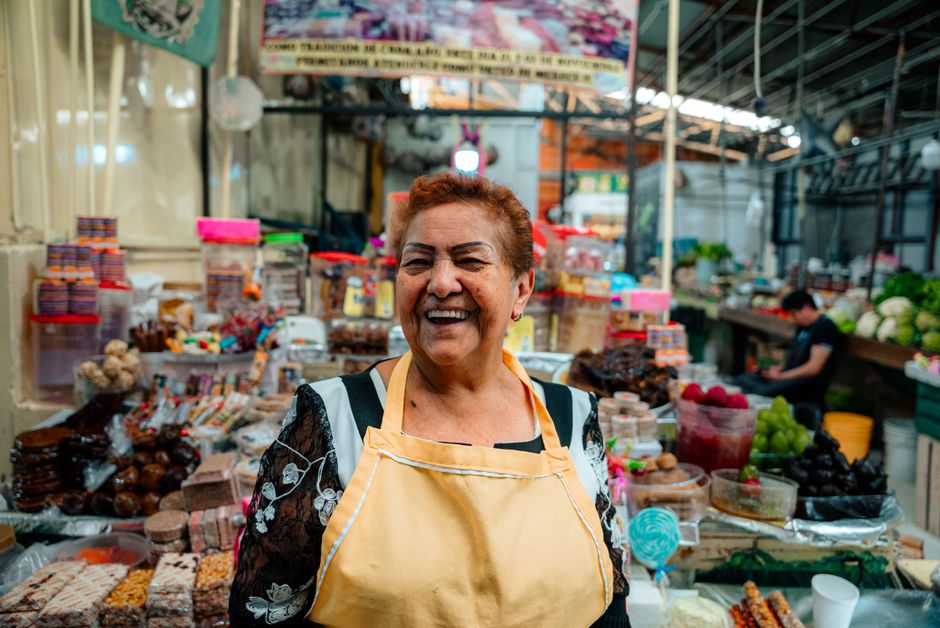
A market can work well when your goal is to practise a regular errand. A civic centre may suit you if you prefer a scheduled activity or a public programme. A neighbourhood facility may be useful when you want a place that gives your week a fixed point. The best option is the one whose conditions you can check and whose timing you can repeat.
Use Barcelona’s current local listings
Search through current local information before relying on a recommendation written for a different season or a different kind of visitor. Barcelona City Council’s GuiaBCN provides listings for activities and facilities across the city. The city’s civic-centre activity finder can help you identify cultural programming, while the official listing for Mercat de Sant Antoni gives a concrete example of how a public market is represented in municipal information.
Treat each listing as a starting point for verification. Check the name, location, activity description, date or schedule information, access conditions, and any registration instructions shown in the current source. Details can change. A page that appears in a search result may be old, incomplete, or describing a recurring programme whose next session has different conditions.
Before you leave, save the official page or write down the basic details in your own checklist. Include the place name, the address as shown by the source, the time you intend to go, and the question you still need to verify. This turns a vague plan into a small, manageable errand.
You can also use a simple comparison:
- One market or public place for a repeatable everyday visit.
- One civic-centre activity that fits your available time.
- One backup option in the same general area.
Do not build a list of fifteen possibilities. Too many options turn a local routine into another research project. Pick the option with the clearest current information and the lowest practical friction. You can explore more later.
This approach connects with the wider idea behind finding local routines beyond tourist stops. The point is to notice where ordinary life can happen, then choose one small entry point that you can repeat. You are gathering evidence about your own week, not collecting attractions.
For Barcelona, official sources should carry the factual load. Use Barcelona City Council listings for current activity and facility information. Use the relevant venue or programme page for conditions that affect your visit. If a detail is missing, contact the responsible organisation or check its current notice before assuming the answer.
Make a repeat visit without expecting a social outcome
Your first visit is a test of fit. It does not need to become a success story.
Marta arrived at the civic centre with enough time to find the entrance, but the room was quieter than she expected. Nobody introduced themselves. She sat near the back, kept her phone on silent, and left with the same number of local contacts she had arrived with. The visit still gave her useful information: the activity was accessible from her neighbourhood, the timing was possible, and she could imagine returning without rebuilding the whole day around it.
A repeat visit should have a small purpose. You might buy a few everyday items at the same market, attend the next suitable activity, sit in the public area for a short period, or ask one practical question at the desk. Choose an action that can happen again without requiring a special mood.
Notice the details that reduce uncertainty:
- Which entrance is easiest to find?
- Is the activity clearly marked?
- Do you need to register before arriving?
- Can you pay or participate in the way the listing describes?
- Is the space comfortable enough for the time you have?
- What would make you return next week?
Keep your expectations behavioural rather than emotional. “I will go once and speak to three people” creates a social performance test. “I will attend, observe the conditions, and decide whether to return” gives you information you can use.
You may speak with someone. You may only exchange a greeting. You may discover that the place feels too busy, too formal, too far away, or poorly matched to your schedule. Those are valid findings. A routine is allowed to fail its first test. The important thing is to record why, then choose whether to adjust the time, select another activity, or stop pursuing that option.
A repeat visit also helps you distinguish a place you genuinely use from a place you merely liked in a recommendation. The first visit contains novelty. The second reveals effort. Can you still get there when the day has gone badly? Can you afford the activity under the conditions listed? Does it fit around work, study, childcare, or appointments?
Marta returned the following week with a shorter plan. She did not expect the room to feel familiar. She wanted to confirm that the timing worked when her other tasks were included. By the time she left, she had a route she could repeat and a note that the activity was worth keeping in her weekly plan. The change was modest, but her next decision was easier.
Check access, cost and registration conditions
A public place can still have conditions. A civic-centre activity may require advance registration. A programme may have limited places. A market visit may be free to enter while the errands inside it still cost money. An activity may be accessible in one sense and difficult in another because of timing, language, mobility, noise, or the information required before arrival.
Check the current listing for the conditions that apply to your chosen place. Look for registration instructions, participation requirements, fees, opening information, accessibility notes, and contact details. If the source does not make a condition clear, ask the organisation responsible for the activity. Do not treat a general search result or an old social media post as confirmation.
Plan a low-cost verification visit when possible. You can first visit the area or building without committing to a paid activity. You can confirm where the entrance is, check whether the information still appears current, and decide whether the journey is practical. This protects your time and reduces the chance that a small uncertainty turns into an expensive mistake.
Keep a note of what you verified and what remains unknown. For example:
- The place is listed by an official city source.
- The activity appears on the current programme page.
- Registration instructions are clear or still need confirmation.
- The journey fits the available part of the week.
- The cost and payment conditions are confirmed by the responsible source.
- A second visit is possible without creating a new logistical problem.
This list is deliberately ordinary. That is its value. Moving abroad creates enough high-stakes decisions around housing, immigration, work, healthcare, banking, and documentation. A local routine should give you a small area where the next action is visible.
Keep routines separate from visa and service assumptions
A local routine can help you organise your week and become more familiar with your surroundings. It cannot confirm your immigration status, extend a residence permit, replace an official appointment, or guarantee that a provider will accept your documents.
Keep visa, permit, registration, tax, healthcare, banking, and contractual questions with the responsible authority or service provider. Check official instructions for your situation, and ask the relevant organisation when the information is unclear or time-sensitive. A market vendor, activity coordinator, neighbour, or online commenter may offer useful local context, but their experience does not establish the rule that applies to you.
This separation protects both parts of the move. You can enjoy learning a neighbourhood without asking the neighbourhood to solve an administrative question. You can also keep an administrative task from taking over every part of your life.
If a provider, office, landlord, school, or employer gives you instructions, write down the exact question and the source of the answer. Avoid turning a casual conversation into a compliance plan. The safest routine is often two-track: one verified checklist for administration, and one small repeatable activity for daily life.
Aqee is designed around that broader transition from Day 0 to becoming settled. Use it to create an Aqee local-settlement checklist with one chosen place, the current source, the conditions you need to confirm, and the date of your first repeat visit. Keep separate entries for questions that belong to immigration authorities or service providers.
What to do next
Choose one Barcelona place or activity today. Use Barcelona’s current local listings to check that it exists and that its information is current. Confirm the practical conditions before you go. Then schedule one visit that fits the week you actually have, not the week you hope to have after everything else is solved.
On the visit, look for evidence of repeatability. Can you find the entrance again? Can you understand what happens next? Can you return without spending more time and money than the routine deserves? If the answer is no, change the place. If the answer is yes, schedule a second visit before the first one becomes a memory.
Marta’s useful discovery was not that one civic centre made Barcelona feel like home. It was that a verified place gave her a dependable next step when the rest of the city still felt unfinished. The following week, she knew where to go for one ordinary hour. That was enough to make the week less shapeless.
For current Barcelona activity and facility information, consult GuiaBCN from Barcelona City Council. For civic-centre programming, check the Barcelona Civic Centres activity finder. For market information, see the Barcelona City Council listing for Mercat de Sant Antoni. For the wider role of local places in integration, the OECD discussion of local integration offers broader context. Listings and conditions can change, so verify them again before relying on them.
Sources
- Barcelona City Council, Mercat de Sant Antoni, checked 2026-09-24.
- Barcelona City Council, GuiaBCN activities and facilities, checked 2026-09-24.
- Barcelona Civic Centres, activity finder, checked 2026-09-24.
- OECD, local integration of migrants and refugees, checked 2026-09-24.
Related Aqee guide
Keep the practical follow-up in your wider move plan with Aqee’s local-activities guide.