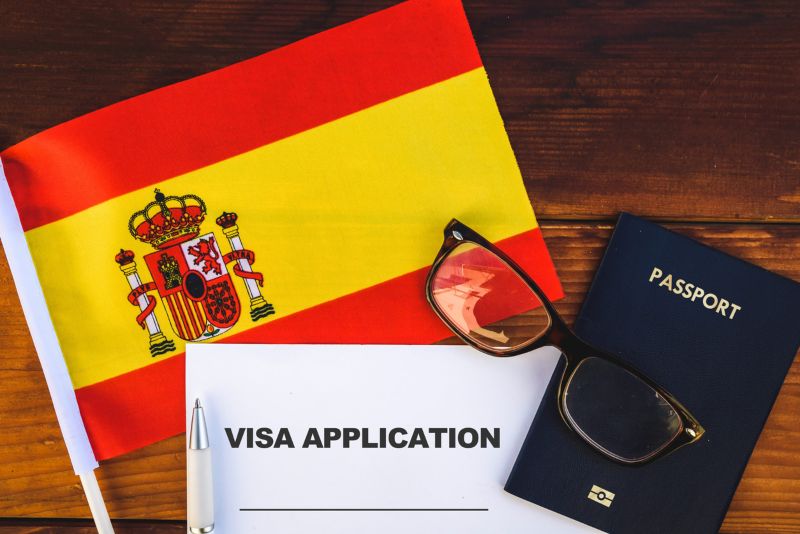

A Slovenia digital nomad temporary residence permit requires evidence that you qualify for the route, work remotely for an employer or business outside Slovenia, and can support yourself during the stay. Before paying a deposit or signing a long lease, confirm the route, document your work relationship, check the current means-of-subsistence rule, and verify where your application must be filed.
At 8:40 on a rainy Monday morning in Ljubljana, Lena sat outside a café near the old town with a folder open on her lap. Inside were a remote-work contract, bank statements, passport copies, and a handwritten note that said, “Ask about the income requirement.”
She had already reserved an apartment. The owner wanted confirmation that day. If Lena could not establish which residence route applied to her, she might lose the deposit and still have no usable plan for staying in Slovenia. The problem was not finding a beautiful place to live. The problem was proving, in the right way, that she could legally live and work there.
This is the practical order to follow: establish eligibility first, prepare evidence second, confirm the application route third, and make housing commitments only after the permit plan is credible.
Confirm whether the digital-nomad route applies
The first question is whether Slovenia’s digital-nomad temporary residence permit is the correct route for your situation.
The Ministry of the Interior describes the route for digital nomads from outside the European Union and European Economic Area who work remotely for an employer or business established outside Slovenia. That boundary matters. A person’s job title, online work style, or ability to work from a laptop does not automatically determine eligibility.
Start by writing down four facts in plain language:
- Your citizenship and whether you are an EU or EEA national.
- The country where your employer or business is established.
- Whether your work is performed remotely.
- Whether the work is connected to a Slovenian employer, client, or labour-market relationship.
Keep these facts separate from your travel plans. A trip to Slovenia, a long stay in Slovenia, and permission to perform work while residing in Slovenia can involve different rules. The same applies to a student route, family route, ordinary employment route, self-employment route, or another residence basis. Do not combine requirements from several routes into one personal checklist and assume the overlap is enough.
If you are an EU or EEA national, begin with the applicable EU or EEA entry and residence rules instead of treating the digital-nomad permit as your default. The GOV.SI entry and residence guidance is the right place to compare the general framework.
For a non-EU or non-EEA applicant, make a route note before collecting documents:
“I am considering Slovenia’s digital-nomad temporary residence permit because I work remotely for an employer or business outside Slovenia. I need to confirm that my work arrangement, nationality, financial evidence, and intended application location fit the current official rules.”
That sentence is deliberately cautious. It records the reason for the route without turning an assumption into a conclusion.
Lena’s first mistake was treating “digital nomad” as a description of her lifestyle. It was not enough to say that she worked online and planned to rent in Ljubljana. She needed to map the legal facts behind those words. Her employer was outside Slovenia, her work was remote, and she was not planning to take a local job. That gave her a clear basis for checking the route, but she still had to verify the evidence and process with the responsible authority.
If your facts are mixed, ask the authority to confirm the route before you spend money. Mixed cases include a foreign employer with Slovenian clients, freelance work for several countries, a company registered in one country but managed from another, or plans to accept local employment after arrival.
Keep remote work outside the Slovenian labour market
The work boundary is central to the permit plan. The digital-nomad route is designed around remote work performed for an employer or business established outside Slovenia. Your evidence should make that relationship understandable to someone reviewing the application.
A useful evidence folder may include your employment agreement, a letter from the employer, company details, or business registration evidence where relevant. The exact documents and acceptable formats must be confirmed against the current official instructions. The aim is to show three connected facts:
- Who pays you or contracts with you.
- Where that employer or business is established.
- What work you perform and how the work is carried out remotely.
Avoid relying on a single document when the relationship is easier to understand through several consistent records. An employment contract may identify the employer but say little about remote work. A bank statement may show payments but not explain the relationship. A company website may provide context but may not prove your contractual position. Your folder should tell one coherent story.
Consistency matters. Check that the employer name is written the same way across your contract, confirmation letter, payment records, and application forms. If you work through your own company, explain the relationship between you, the company, and the clients or contracts that support your income. If the documents use different legal names, include an explanation and supporting evidence rather than hoping the reviewer will connect them.
Do not use the digital-nomad route as a general promise that every kind of online work is acceptable. The official description draws a line around work for an employer or business outside Slovenia. Questions about local clients, local employment, professional licensing, tax treatment, and social-security obligations may require separate guidance. A residence permit is not a universal answer to every question created by working across borders.
This is also where a tempting housing decision can create pressure. Lena’s prospective landlord asked whether she could work from Slovenia. She wanted to answer quickly, but “I work online” was too vague. She prepared a short explanation of her foreign employment relationship and kept it separate from any claim about local work authorization. That gave her a document she could review with the responsible authority instead of improvising in an email.
Before submitting anything, create a one-page work map:
Employer or business: the legal entity outside Slovenia.
Relationship: employee, contractor, or business owner, described accurately.
Work location: remote work performed while residing in Slovenia, subject to the route’s rules.
Local activity: any Slovenian employer, clients, or planned local work that may require separate confirmation.
Evidence: the document that supports each statement.
The map is not an official form. It is a preparation tool. It helps you spot an unresolved question before it becomes a missing-document problem.
Check the current means-of-subsistence evidence
Financial evidence is another place where an apparently simple plan can become expensive. The Ministry of the Interior’s digital-nomad guidance sets a means-of-subsistence requirement, and the calculation or evidence standard can depend on the current official rule. Do not copy a figure from an old blog post, a social-media comment, or another country’s visa guide.
Check the current official page before calculating your target. Then record:
- The required level or calculation method.
- The period for which you must show support.
- Which sources of funds may be accepted.
- Whether income, savings, or another form of financial evidence is relevant.
- Whether the authority requires a particular statement, letter, balance, or format.
The important practical distinction is between having money and proving it in an acceptable way. A healthy balance in an account may not answer every question about regular income. A contract may show future earnings but not available funds. A payment history may show income but not explain whether the arrangement continues. Gather evidence that matches the official requirement rather than building a large folder of unrelated financial records.
Use a calculation worksheet, but label it as your own planning document. Write the official source date at the top and leave a blank space for the amount if the rule may change. If you do enter a figure, record how you reached it and which official page supports it. Recheck the calculation shortly before applying.
Lena had enough money for the apartment, the deposit, and the first months of daily life. That did not automatically mean her evidence was ready. Her statements covered different periods, and one incoming payment used a shortened company name. She could either submit a confusing folder or pause, request an updated employer letter, and align the records. The apartment deadline still existed. So did the possibility that her application would be delayed or questioned if the evidence did not connect.
She chose the slower-looking task because it reduced the larger risk. By the time she returned to the landlord, she had a clearer answer about what she could responsibly commit to. She had not secured a permit yet. She had improved the quality of the decision.
Keep copies of the exact records you reviewed. Save the source page, the date you checked it, and any authority response you receive. Requirements can change, and a calculation that was reasonable months ago may need to be updated.
If your income is irregular, comes from multiple clients, is paid through a company, or includes savings, ask the responsible Slovenian authority how the current means-of-subsistence requirement applies. Do not quietly substitute a different standard because it is easier to document.
Use the correct application and duration route
The next task is to confirm where and how you can apply. The Ministry’s digital-nomad guidance covers application and duration, while the broader GOV.SI entry and residence guidance helps place the permit within Slovenia’s general residence framework.
Your application location can depend on facts such as your nationality, current lawful stay, and the route available to you. Confirm whether the application must be made through a Slovenian diplomatic mission or consular post abroad, through an authority in Slovenia, or under another permitted arrangement. Do not infer the answer from a friend’s experience. Two applicants with the same remote-work arrangement may have different options because their citizenship or current status differs.
Write the application question in a form you can send to the responsible authority:
“I am a citizen of [country]. I work remotely for [employer or business] established outside Slovenia. I am considering the digital-nomad temporary residence permit. Based on my nationality and current location, where should I submit the application, and which current evidence must accompany it?”
Then ask about the duration route. The official source describes the duration of the digital-nomad temporary residence permit. Confirm the current period, whether an extension or renewal is available, and what happens when that period ends. Do not build a multi-year housing or travel plan around an assumption that the permit can continue indefinitely.
Duration planning affects your evidence and your exit plan. A residence permit may cover a defined period, while a lease, school term, insurance arrangement, or storage contract may last longer. Put the dates side by side. If the permit ends before the commitment does, decide what happens before signing.
This is also where route separation protects you from confusion. The digital-nomad permit, a residence permit based on employment, an EU or EEA residence route, and a family member’s route should each have their own checklist. You may later need more than one route in a household, but the evidence should remain separated so that one person’s eligibility does not become an unsupported assumption about another person’s status.
For family planning, prepare the core permit evidence first and then check each family member’s requirements separately. Aqee’s guide on what your family may need to prove before booking a digital-nomad year in Slovenia can help you think through that planning question before money is committed.
Separate permit planning from housing commitments
Housing is emotionally immediate. Permit evidence is slower and less visible. That is why people often reverse the order.
A refundable booking, flexible accommodation, or short initial stay may give you room to verify the route before accepting a long lease. The right choice depends on your finances and circumstances, but the decision should account for permit uncertainty. Ask what you would lose if the application location is wrong, the financial evidence needs revision, or the work relationship falls outside the route.
Before paying a deposit, write down:
- What the payment becomes if the application is delayed.
- Whether the agreement can be cancelled or changed.
- Which dates depend on the permit being granted.
- Whether the landlord requires proof of residence, employment, or another document.
- What you can afford to lose if the route does not work.
This is not a reason to panic about every booking. It is a reason to price uncertainty honestly.
Lena reopened the apartment listing that evening. The location still appealed to her, but she no longer treated it as the first domino. She asked whether the owner could hold the apartment only after her residence plan was confirmed, and she looked for a temporary option that would not put the rest of her savings at risk. Her plan became less dramatic and more useful: verify the permit route, keep evidence aligned, arrive with a backup address, and explore Ljubljana once the legal foundation was clear.
That order protects the fun part of relocation. You can spend your first weeks finding your favourite bakery, learning which neighbourhood feels like home, and figuring out where to buy the one ingredient you brought from your old kitchen. Those details matter. They simply deserve to sit on top of a residence plan you understand.
What to do next
Create an Aqee local-settlement checklist with separate sections for route eligibility, remote-work evidence, means of subsistence, application location, permit duration, housing risk, and arrival tasks.
For each section, record four things: the question, the document or source you checked, the date you checked it, and the point that still needs confirmation. Keep official requirements separate from personal preferences. “I want to live near the centre” is a housing preference. “I can apply from my current location” is a process question.
Use the official Slovenian sources for the final answer:
- Slovenia Ministry of the Interior: temporary residence permit for digital nomads
- GOV.SI: entry and residence
This article is an evidence-planning guide, not legal advice. Confirm current eligibility, documents, means-of-subsistence calculations, application location, duration, and work boundaries with the responsible Slovenian authority before applying or making an irreversible housing commitment.
Sources
- Slovenia Ministry of the Interior, digital nomad temporary residence permit, checked 2026-09-24.
- Slovenia Ministry of the Interior, application and duration, checked 2026-09-24.
- Slovenia Ministry of the Interior, means of subsistence, checked 2026-09-24.
- GOV.SI, entry and residence, checked 2026-09-24.
Related Aqee guide
Keep the practical follow-up in your wider move plan with Aqee’s immigration-paperwork guide.