
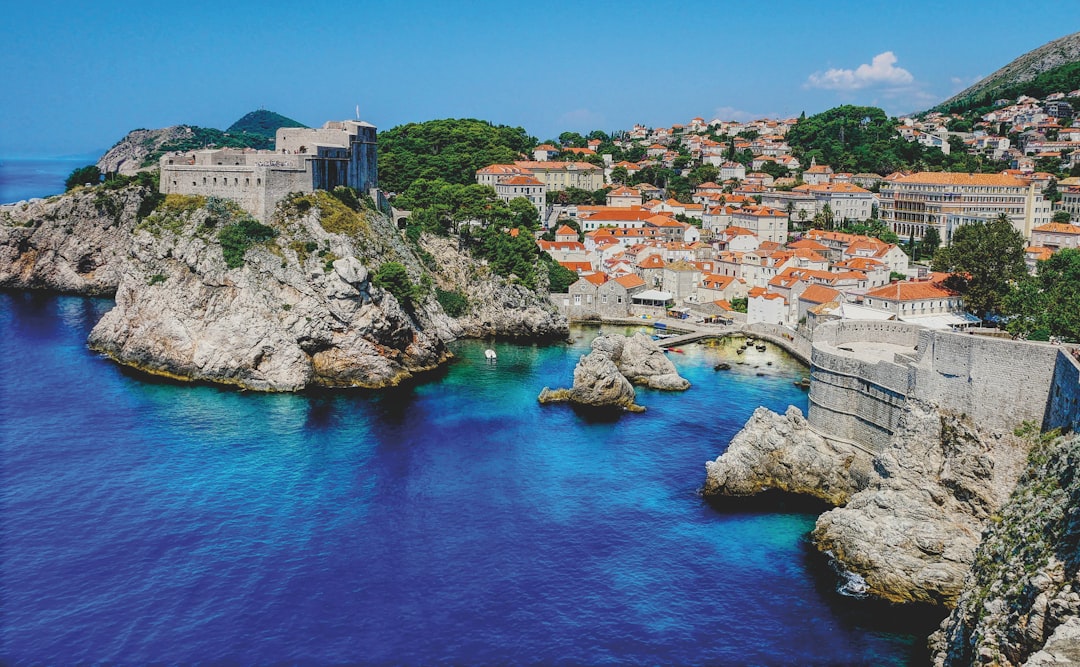
Croatia’s digital nomad temporary stay is available to eligible third-country nationals who work remotely for a company or clients outside Croatia, subject to the conditions published by Croatia’s Ministry of the Interior. The Ministry’s current guidance also separates the temporary-stay application, the approval decision, and any visa or entry step that may apply to your nationality.
At 8:10 on a rainy Tuesday morning, Luka stood outside a municipal building in Split with a passport, a laptop charger, and two versions of the same remote-work letter in his backpack. The clerk had already told him that the first version did not clearly show who paid him. His apartment booking had a fixed end date. If the application failed, he could lose the accommodation and leave Croatia before finishing the move he had planned for the season.
Luka is an illustrative composite, but the pressure is familiar. Digital nomad relocation often feels like one large decision, while the authorities treat it as several separate questions. What is your citizenship? Where is your work relationship based? How long do you want to stay? Which authority should receive the application? Do you need a visa to enter Croatia? What happens after approval?
A careful plan keeps those questions apart. It also gives you a way to spot missing information before you are standing in a queue with a document that does not explain your situation clearly.
Start with citizenship and the actual remote-work relationship
Begin with the facts that determine which part of the Croatian process applies to you. Record your citizenship exactly as shown in your passport, then describe your work relationship in plain language.
The Ministry of the Interior uses the term “digital nomad” for a third-country national who works through communication technology for a foreign company or for their own company that is not registered in Croatia, and who does not perform work or provide services to employers in Croatia. The wording matters because the category is tied to both nationality and the location of the business relationship.
That means “I work online” is not a complete eligibility explanation. You should be able to answer questions such as:
- Who pays you?
- Where is that company registered?
- If you own the business, where is it registered?
- Are any of your Croatian customers, employers, or contracts part of the work you are relying on?
- Will you continue serving the same foreign employer or business during your stay?
A person who works remotely for a company outside Croatia may fit the Ministry’s definition, depending on the rest of the applicable conditions. A person who intends to take local employment or provide services to a Croatian employer needs to examine a different route. Do not assume that the freedom to work from a laptop makes every kind of work compatible with digital-nomad temporary stay.
This is the point where your own records should become more precise. Create a short profile containing your passport nationality, your employer or business location, the nature of your remote work, and the Croatian city or area where you intend to live. Keep the wording consistent across employment letters, business records, accommodation information, and application answers. Consistency will not replace an official requirement, but it can make it easier to explain the facts accurately.
You should also check the Ministry page directly before relying on an older checklist copied into a blog post, forum, or social media group. Croatia’s rules and administrative instructions can change, and a document that helped another applicant may not answer your own situation.
Check the digital-nomad definition and local-work boundary
The most important boundary is the relationship between your work and Croatia. The temporary-stay category is designed around remote work for a foreign company or a person’s own company registered outside Croatia. It does not create a general permission to accept local work.
This distinction can become blurry when a person has several income sources. Imagine that you work for a software company registered abroad, but you also begin advising a Croatian startup after arriving. That second relationship may affect whether the digital-nomad category accurately describes your activities. The right response is not to hide the local work inside a broad phrase such as “freelance projects.” Identify the relationship and ask the responsible Croatian authority how it should be treated.
The same care applies to founders and freelancers. Owning a foreign company, contracting through a foreign company, and being employed by a foreign company are different arrangements. The Ministry’s definition refers to a person working remotely for a foreign company or for their own company that is not registered in Croatia. Your documents should show which arrangement applies to you.
This is preparation, not a legal conclusion. The Ministry’s page is the authoritative starting point for the category, and the competent authority can address facts that do not fit neatly into a general explanation.
For your planning file, keep three short notes:
- “My citizenship is…”
- “My remote-work relationship is with…”
- “I will not rely on Croatian local employment or Croatian service contracts for this temporary stay.”
Only write the third sentence if it is true. Do not reshape your circumstances to fit a category. If your plans include Croatian work, investigate the route that matches that work instead.
Luka’s problem in Split was not that he had forgotten every document. He had a folder full of them. The problem was that his first letter described his job, while his second letter described his company, and neither made the relationship easy to understand. He rewrote the explanation in factual terms, checked it against the Ministry’s definition, and marked the questions that still required confirmation. The application became a controlled task instead of a guess.
Plan the temporary-stay duration without assuming an extension
The Ministry states that temporary stay for digital nomads can be granted for up to one year. The stay may be granted for a shorter period, depending on the circumstances and the application. The Ministry also states that temporary stay for digital nomads cannot be extended, and that a new application for the same purpose may be submitted after six months have passed from the expiry of the previously granted temporary stay.
Treat the maximum period as an upper boundary, not as an automatic entitlement. Your own intended duration, the decision made by the competent authority, and the rules that apply to your situation all need to remain visible in your plan.
This is where many relocation plans become fragile. Someone books accommodation for a full year, arranges travel around that booking, and treats the planned end date as if it were already approved. A safer sequence is to separate:
- the period you hope to spend in Croatia;
- the period you request or become eligible to receive;
- the period actually granted by the authority;
- the date by which you must leave or change status;
- the consequences of the temporary stay ending.
Do not build a renewal plan on the assumption that this category can simply be extended. The Ministry’s guidance expressly addresses extension and the waiting period before a new application for the same purpose. Record those points in your calendar and verify the current wording before making non-refundable commitments.
Luka had planned to remain in Split until the following spring. After checking the duration guidance, he changed the shape of his plan. He chose an initial accommodation arrangement that matched the period he could responsibly support, kept a separate date for reviewing his status, and stopped treating a possible future application as guaranteed. His laptop calendar now contained a review task before the end of the authorised period, rather than a vague reminder to “sort visa later.”
That small change protects more than paperwork. It protects housing, travel, work continuity, insurance decisions, and the time needed to make a second plan if the first one cannot continue.
If family members are travelling with you, keep their situation in a separate section. Their entry and stay rights may involve different conditions. Do not assume that your digital-nomad temporary stay automatically answers every question for another person.
Use the competent application and visa route
The Ministry explains that an application for temporary stay as a digital nomad can be submitted online through the Ministry’s application route, or in person through the competent police administration or police station, depending on the applicant’s circumstances. The same guidance also directs applicants to the competent Croatian authority and explains the role of a diplomatic mission or consular office where a visa is required.
The practical lesson is simple: application routing depends on your situation. Citizenship, current location, lawful stay, and visa requirements can affect where and how you apply. Use the current Ministry instructions to identify the competent route instead of choosing the most convenient-looking office or copying another applicant’s path.
Keep three separate records:
- the temporary-stay application route;
- the authority responsible for deciding or processing the application;
- the visa or entry route that applies to your nationality.
These records may point to different institutions or different steps. Combining them into one label such as “Croatia visa” can hide an important gap.
A visa is also not the same thing as approval of temporary stay. Some third-country nationals may need a visa to enter Croatia, while others may not. If a visa is required, the Ministry’s guidance explains that the relevant application is made through a Croatian diplomatic mission or consular office after the temporary stay has been approved, according to the applicable process. Confirm the current instructions for your citizenship before booking travel.
Do not confuse an acknowledgement that your application was received with a decision granting temporary stay. An application receipt may prove that you submitted something. It does not necessarily mean that the application has been approved, that you may enter Croatia, or that you may remain for the full period you requested.
The same separation applies to accommodation. Finding a room in Zagreb, Dubrovnik, Rijeka, or Split may help you prepare your relocation, but a booking does not create immigration permission. Accommodation evidence, an application, an approval, and entry documentation each answer a different question.
Keep acknowledgement, approval and entry separate
Use a simple status table in your own notes:
| Item | What it tells you | |—|—| | Application acknowledgement | The authority received your submission or documents | | Temporary-stay approval | The authority granted the requested status under its decision | | Visa or entry permission | Whether and how you may enter Croatia | | Accommodation arrangement | Where you plan to live and for which period |
The labels are deliberately plain. They reduce the chance that a positive update in one part of the process will be mistaken for permission in another.
If the Ministry or a consular office asks for clarification, answer the specific question and preserve the correspondence. If a document is unclear, ask the responsible authority rather than relying on a forum answer. Keep copies of your passport, submitted materials, messages, decisions, and dates in a secure place.
The Japan digital-nomad visa planning guide is useful for the same broader lesson: a fixed stay needs an exit plan before arrival. Croatia’s own duration rules should guide the details here.
What to do next
Open a note titled “Croatia digital nomad temporary stay” and write four lines:
- My citizenship:
- My foreign employer or company:
- My intended Croatian location:
- My planned stay period:
Then compare those facts with the Croatia Ministry of the Interior guidance on temporary stay for digital nomads. Mark each point as confirmed, unclear, or requiring direct confirmation from the competent authority.
Next, check the visa boundary for your nationality. Do not book travel on the strength of an application acknowledgement. Do not book a year of accommodation on the strength of a hoped-for maximum stay. Keep your approval date, authorised stay period, entry route, and accommodation dates in separate calendar entries.
Luka’s final checklist fit on one page. His foreign work relationship was described consistently. His intended time in Croatia had a review date. His application route and entry route were written separately. He still had questions, but they were now questions for the right authority, attached to the right stage of the process. When he returned to the building, he was carrying fewer assumptions along with the same passport.
Create an Aqee local-settlement checklist. Add the practical tasks that begin after the immigration route is clear, such as accommodation dates, local registration questions, banking or payments, connectivity, healthcare planning, neighbourhood research, and the date you will review your next move. The checklist cannot decide eligibility for you, but it can keep the rest of your relocation from depending on one uncertain answer.
Sources
- Croatia Ministry of Interior, temporary stay of digital nomads, checked 2026-09-24.
- Croatia Ministry of Interior, duration and extension, checked 2026-09-24.
- Croatia Ministry of Interior, digital-nomad application, checked 2026-09-24.
- Croatia Ministry of Interior, entry-visa route, checked 2026-09-24.
Related Aqee guide
Keep the practical follow-up in your wider move plan with Aqee’s immigration-paperwork guide.


