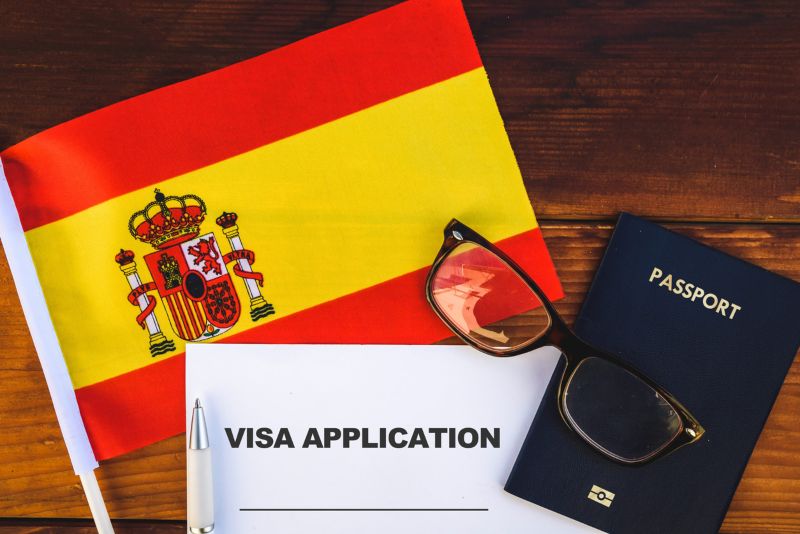

For international travel with a U.S. passport, prepare by checking the current rules for your destination and journey mode, then comparing your passport validity with the requirement that applies to that route. Keep the required originals together with secure, accessible copies of your passport and supporting documents.
At 6:40 a.m. in a crowded airport queue, Lena held her passport in one hand and a printed itinerary in the other. Her flight was leaving that morning, but the real question was still unanswered: would her passport meet the destination’s entry rule for the full trip, or would a validity requirement create a problem before she reached the gate?
She had checked the passport’s expiration date twice. That was the part she had assumed mattered. The detail she had not yet checked was the destination’s current rule, along with the kind of journey she was taking and what documents she might need beyond the passport itself. If the requirement did not match her passport, the bad outcome was clear: a denied boarding decision, a disrupted trip, or a return to the airport later with the same problem unresolved.
The third-party travel page open on her phone was vague. Lena closed it and went to the official U.S. government sources for the destination and travel documents. That change gave her a route-aware checklist instead of a general travel tip. She confirmed the rules, checked the passport against the relevant validity requirement, and separated digital copies from the originals in her luggage.
Later, when she began planning a longer move, she used the same habit for residence documents, housing records, insurance information, and local registration tasks. A passport check had become part of a larger preparation system.
Start with the destination and journey mode
A passport preparation check begins with two questions:
Where are you going, and how are you getting there?
The destination matters because entry rules vary by country and can change. The journey mode matters because air travel, land travel, sea travel, transit through another country, and a cruise itinerary can involve different document expectations. Your final destination may not be the only place whose rules affect the trip. A connection or border crossing can introduce another checkpoint.
Write down the complete route before checking documents. Include:
- The country where you will enter.
- Any country where you will change planes or pass through border control.
- Whether you are travelling by air, land, or sea.
- Whether the trip is a short visit, a longer stay, a study period, work, or a move.
- Whether you expect to leave and re-enter the destination.
- Whether someone travelling with you has a different nationality or document type.
This simple route map prevents a common preparation error: checking one country’s general travel advice while overlooking another part of the itinerary.
The U.S. Department of State’s international travel checklist is a useful starting point for organizing the research. It covers practical preparation areas such as passports, destination information, travel documents, and copies. The U.S. Customs and Border Protection guidance for U.S. citizens also explains document considerations for returning to the United States.
Use official sources for the current rule. A travel forum, an old blog post, a booking site, or a friend’s experience may help you identify questions, but they should not be your final authority for entry or document requirements. Rules can depend on nationality, purpose of travel, length of stay, and the exact route.
Your journey mode also affects what you should carry in a practical way. A document stored only in checked luggage may be unavailable when you need it. A document saved only on a phone may be difficult to access if the battery is low, the device is lost, or the file is protected by an account you cannot reach. Plan for the moments when you will be asked to show information quickly.
Check passport validity against the actual route
The expiration date printed in your passport is one fact. The destination’s passport-validity rule is another.
Some destinations require a passport to remain valid beyond the planned arrival or departure date. The length of that extra validity, if required, depends on the destination and the circumstances of travel. You should check the current official rule rather than applying a general rule you remember from a previous trip.
Start by recording:
- The passport expiration date.
- The planned date of arrival.
- The planned date of departure.
- Any possible onward travel date.
- The countries involved in transit or re-entry.
- Whether the destination requires blank pages or other passport conditions.
Then compare those dates with the actual requirement published by the responsible authority. The U.S. Department of State’s passport services FAQ provides official passport information, including guidance on passport validity and related questions. Destination-specific entry information may also be available through the Department of State’s country information and the destination government’s official immigration or foreign-affairs website.
Do not rely on the fuel-error analogy often used for travel preparation, where the wrong input leads to the wrong destination. Passport preparation requires more than checking whether the document exists. The useful comparison is between your route and the rule that governs that route.
A passport can be valid for travel in a general sense while still failing a particular destination’s requirement. A passport can also be in good condition but unsuitable for the purpose of travel if you need a visa, residence authorization, or another document. The check must connect the document to the journey.
If your passport may not meet the applicable rule, pause before making assumptions about what will happen. Check the current guidance from the destination authority, your airline or carrier where relevant, and the U.S. Department of State. If renewal or replacement is necessary, confirm the current application process and expected timing through official passport services information. Do not treat an old social post or a previous traveller’s timeline as a promise.
Lena’s problem became manageable when she wrote the route in full. Her question changed from “Is my passport still valid?” to “Does this passport meet the current requirement for this destination, this itinerary, and this kind of travel?” That question produced a more useful answer.
The same approach matters when travel becomes relocation. An international student arriving for a program, an employee moving for a contract, and a digital nomad planning a longer stay may all carry U.S. passports, but their document preparation can involve different permissions and supporting records. The passport is the anchor document. It is not the whole plan.
Confirm entry and visa requirements
Passport validity is only one part of entry preparation. You also need to confirm whether the destination requires a visa, electronic travel authorization, residence permission, proof of onward travel, or another document for your purpose and length of stay.
Begin with the destination’s official immigration or foreign-affairs source. Check the requirements for U.S. citizens and match them to your reason for travel. A short visit, study, paid work, volunteering, remote work, and relocation can fall under different categories. Do not choose a category because it sounds close enough.
Record the answers in a simple document:
- What permission is required before departure, if any?
- Is the application submitted online, through a consulate, or through another official channel?
- What passport details must match the application?
- What supporting documents must be presented?
- Must you carry proof of approval or an authorization number?
- Are there separate rules for transit or re-entry?
- Which authority should you contact if the published information is unclear?
The CBP Welcome to the United States guide provides official information for people entering the United States, while the Department of State and destination authorities provide guidance for U.S. citizens travelling abroad. These sources serve different parts of the journey, so keep them separate in your preparation notes.
A source-led check also helps you spot uncertainty. If one website says a document is optional and another says it is required, do not average the answers. Identify which authority is responsible for the rule and ask that authority or a qualified immigration professional. Avoid treating airline staff, accommodation providers, online communities, or relocation apps as substitutes for the official decision-maker on regulated requirements.
Keep the evidence for your preparation. Save the official page as a PDF or bookmark the source, note when you checked it, and write down any instruction that affects your route. Pages can change, and a saved note can help you remember what you verified. It does not replace checking again before departure.
For a longer move, build this document check into your settlement plan. After entry, you may need to manage local registration, housing, banking, health coverage, tax administration, phone service, and residence-permit tasks. Each task can have its own responsible authority and its own supporting documents. A route-aware preparation habit gives you a structure for those next steps.
A useful companion is this EU move document tracker, which explores how to separate official requirements from your personal to-do list. The principle applies beyond Europe: keep the legal or administrative requirement distinct from the practical task you need to complete around it.
Keep accessible document copies
Copies are a backup for the day your original document is misplaced, damaged, or temporarily held for an official process. They do not replace required originals, and a copy is not automatically accepted in place of a passport or authorization. Their value is speed and resilience.
Create a copy set that includes the information you may need to identify yourself, explain your route, or recover a document. Depending on your trip and circumstances, that may include:
- The biographical page of your passport.
- Any visa, entry authorization, or residence document.
- Your travel itinerary and booking details.
- Proof of accommodation or an address where you will stay.
- Insurance information.
- Emergency contact details.
- Relevant application receipts or approval notices.
- Documents needed for study, work, or relocation.
Keep the copy set separate from the originals. If the passport is in your personal bag, store the paper copies elsewhere in your luggage and keep encrypted digital copies in a secure account you can access without relying on a single device. Do not send sensitive documents casually through public messaging groups or leave them in an open shared folder.
Check the copies before you leave. Make sure the text is readable, the pages are complete, and the file names are clear. A photograph that cuts off the passport number or a scan hidden among dozens of unnamed files will not help much under pressure.
Lena’s useful change was small. She placed the paper copy set in a separate compartment and saved the digital files where she could reach them offline. When she later needed to explain her travel documents during her move, she did not have to empty every bag or search through old email. The documents were grouped by the next action they supported.
That is the difference between collecting files and preparing for a journey. Each document should answer a practical question: What is this for, when will I need it, and what happens next?
What to do next
Set aside one preparation session before booking or departing. Draw the route, identify the journey mode, and check the current official rules for every relevant destination and transit point. Compare your passport expiration date with the specific validity requirement. Confirm visas and other entry permissions for your nationality and purpose of travel. Then create a secure copy set and keep it separate from the originals.
If you are moving abroad, continue the same chain after arrival. Create an Aqee local-settlement checklist. Add the tasks that turn an entry document into a workable life in the new city: the address, registration steps, permit follow-up, local services, and the practical jobs that are easy to forget when every task feels urgent.
Your passport check should end with a clear next action, not a pile of open tabs. Write down the authority you checked, the date you checked it, the document that proves your permission, and the next thing you must do. Then put that next step somewhere you will see it before the route begins.
Sources
- U.S. Department of State, passport services FAQ, checked 2026-09-24.
- U.S. Department of State, international travel checklist, checked 2026-09-24.
- U.S. Customs and Border Protection, documents for U.S. citizens, checked 2026-09-24.
- U.S. Customs and Border Protection, Welcome to the United States, checked 2026-09-24.
Related Aqee guide
Keep the practical follow-up in your wider move plan with Aqee’s immigration-paperwork guide.