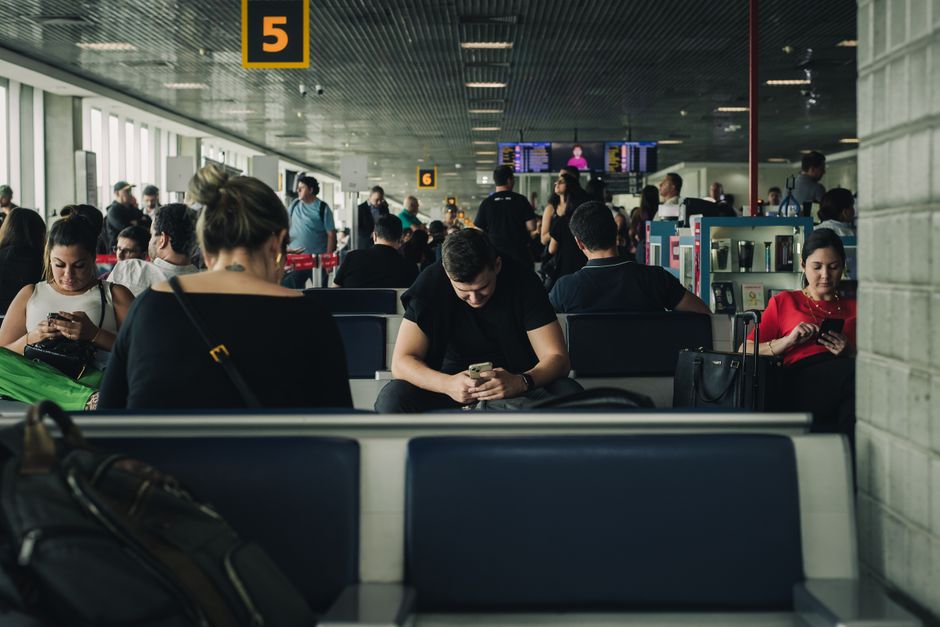

If you arrive at Kuala Lumpur International Airport late, first confirm your terminal, check whether KLIA Ekspres or KLIA Transit is still running, and compare the remaining rail window with the official airport taxi counters. Keep your destination address, route choice, booking details, and a backup plan available offline before you leave the terminal.
A late arrival becomes much easier when you treat it as a short transport decision. You need to establish four facts: where your flight lands, when you can realistically leave the airport, where you are staying, and which official transport channel still fits that timing. Kuala Lumpur has more than one airport terminal and more than one airport transport option, so checking the route after landing can create unnecessary uncertainty.
Confirm the terminal and destination first
Start with your arrival terminal. Check your booking confirmation, airline app, boarding pass, or current airport information before travelling. Malaysia Airports provides information for KLIA facilities and terminals, while the airport’s public transport information identifies the transport services available from KLIA. You can review the Malaysia Airports KLIA public transport information before departure.
Your terminal affects where you go after immigration and baggage collection. It also affects how much walking, signage-following, and internal transfer time you may need before reaching a train station or taxi counter. A schedule that appears possible from the airport may become less comfortable once you include disembarkation, immigration, luggage collection, customs, and the walk to the transport area.
Write down the destination address exactly as supplied by your accommodation. Include:
- The property name.
- The full street address.
- The neighbourhood or district.
- The phone number or messaging contact for the property.
- Any building, tower, block, or unit detail.
- The check-in instructions and latest arrival procedure.
A map pin can help, but it should not replace a written address. Some Kuala Lumpur properties have similar names, and a driver may need the street address rather than a booking-platform label. If your accommodation is inside a large apartment or hotel complex, save the entrance or lobby instructions as well.
Then confirm how late check-in works. Transport and accommodation are separate decisions. A train or taxi can take you into the city, but it does not guarantee that a reception desk, key collection point, host, or building security team will be available when you arrive. Message the property before departure if you need a late check-in arrangement. Save the reply offline or take a screenshot.
This separation matters because it prevents one uncertain detail from hiding another. You may find a transport route that operates late but still need a confirmed key collection process. You may also have a confirmed check-in but discover that the quickest rail service has already ended. Record both decisions separately.
Check whether the rail window fits the arrival
KLIA Ekspres publishes its service information, journey time, and schedule on its official website. Check the current timetable on the KLIA Ekspres service page close to your travel date, because operating times and service arrangements can change.
Do not use your flight’s scheduled landing time as your rail departure time. Build a realistic sequence:
- The aircraft reaches its parking position.
- You leave the aircraft and follow airport signs.
- You pass immigration.
- You collect checked baggage, if applicable.
- You pass customs.
- You reach the station or transport area.
- You locate the correct platform, ticket channel, or entrance.
The relevant time is when you can reach the train service, not when the aircraft touches down. A flight arriving at the end of the rail operating window creates a different decision from one arriving several hours earlier, even if both are described as late arrivals.
Allow for delays. Immigration queues, baggage delays, a gate change, or a missed connection can remove the margin you thought you had. If the last practical train connection depends on every step happening on time, treat the taxi option as part of your plan rather than discovering it after the rail window closes.
KLIA Ekspres and KLIA Transit are related airport rail services, but they serve different stop patterns. Check the official route and service information for your destination before choosing between them. The airport-transfer FAQ from KLIA Ekspres explains how the airport rail transfer works and can help you understand the service conditions before landing.
Your destination also determines whether rail is convenient after the airport. A central Kuala Lumpur station may still leave you with a final taxi or rideshare journey, walking route, or local connection. Consider the complete route from the airport to your accommodation. A shorter airport-to-city rail journey may still require a difficult late-night transfer at the other end.
Write down the last practical rail departure you are targeting, the station where you need to leave the train, and the final connection to your accommodation. Keep this information in a note that works without mobile data. If the schedule changes or your arrival is delayed, you can compare the actual situation with your planned cutoff.
Use the correct KLIA Ekspres or Transit service
KLIA Ekspres and KLIA Transit should be checked as distinct services, not treated as interchangeable labels. The official KLIA Ekspres information identifies the service, route, timetable, and journey details. Read the current information for the date and destination you need.
KLIA Ekspres is designed for the airport connection to Kuala Lumpur city, while KLIA Transit includes intermediate stops. The right choice depends on where you are going and which service is operating when you arrive. A passenger heading toward the city centre may value the direct airport connection, while another destination may require the stopping service or a later onward transfer.
Before entering the station area, confirm:
- The service name displayed on the signs.
- The direction of travel.
- The destination station.
- The current departure time.
- Whether the service is operating normally.
- The onward route from the station to your accommodation.
Check the official information rather than relying on an old screenshot, a blog post, or a timetable saved from a previous trip. Airport services can have changed operating patterns, maintenance arrangements, or ticket conditions. The official page is the responsible source for current service details.
If you have luggage, consider the practical burden of the final connection. A rail route can be predictable and useful, but you still need to move your bags through the station and then reach the accommodation entrance. A taxi from the airport may cost more than rail, while taking you directly to the address. The cheaper route is not automatically the easier route at the end of a long flight.
Also check whether your accommodation is close to the city station or only appears close on a map. A road route can be affected by the entrance location, one-way streets, building access, and late-night security procedures. Save the station-to-accommodation plan as a separate step.
If the rail window closes before you can realistically reach the station, stop treating rail as the primary plan. A late decision made under pressure often creates more risk than a deliberate switch to an official taxi channel.
Use official airport taxi counters when rail is not practical
Malaysia Airports identifies taxi services and public transport information for KLIA. If rail is unavailable, does not fit your arrival time, or leaves an awkward final connection, use the airport’s official taxi counter or designated taxi process. Follow airport signs and staff directions to the authorised service point.
Avoid accepting an unsolicited offer from someone approaching you inside the terminal. Walk to the official counter or designated pickup area, confirm the booking or fare process, and keep the receipt or booking record. The specific service conditions, payment arrangements, and fare details can vary, so confirm them at the official channel before entering the vehicle.
Show the driver the written destination address, including the property name and full location. Keep the accommodation’s contact details available in case the driver needs clarification. If the property has multiple entrances, use the arrival instructions you saved before departure.
A taxi may be the more practical choice when:
- Your flight arrives after the last suitable rail service.
- Immigration or baggage collection has taken longer than expected.
- You are carrying several bags.
- Your accommodation is far from the nearest useful rail station.
- You have a confirmed late check-in arrangement at a specific entrance.
- You want to avoid an additional late-night transfer.
The trade-off is cost. The taxi may be more expensive than rail, and the journey time by road can vary with traffic and the final destination. The benefit is a direct route from the airport transport area to the address, which can reduce the number of decisions you need to make after a long journey.
Ask the official counter what you need to know before leaving: where to wait, how the driver or vehicle will be identified, what receipt or booking record to retain, and where the designated pickup point is. Save those details offline. If the arrangement depends on a number, code, or booking reference, take a screenshot and write the key information in your arrival note.
Do not make immigration, visa, or accommodation changes while standing at the taxi counter unless the relevant authority or property has instructed you to do so. The transport decision is narrower: reach the confirmed address through an authorised channel and retain a record of the journey.
Keep the arrival record separate from immigration and accommodation decisions
Create one small arrival record before you leave for Malaysia. It should contain the information you need during the airport-to-accommodation journey, without mixing it with long-term relocation tasks.
Include:
- Flight number and arrival date.
- Terminal.
- Estimated landing time.
- Accommodation name and full address.
- Late check-in instructions.
- Planned rail service, if applicable.
- Target station and final connection.
- Official taxi counter or pickup instructions.
- Accommodation contact details.
- A backup route.
- Important booking references.
- Screenshots of the relevant confirmations.
This record should work without a local SIM or continuous data connection. Download or screenshot the essential information before departure. You can read more about the same practical problem in How Do You Reach Your Kuala Lumpur Stay After Midnight Without a Local SIM?, then adapt the preparation to your own terminal, timing, and address.
Keep the transport record separate from immigration documents and residence-permit planning. Your passport, visa or entry permission, and other travel documents need their own secure storage. The arrival route is one immediate task. Immigration compliance and future permit administration may require different documents, deadlines, or official instructions.
This separation also makes your first night easier to manage. If your flight is delayed, you can update the transport decision without losing track of your check-in instructions. If the taxi route changes, you still have your accommodation contact. If your accommodation cannot accept a late arrival, you can address that problem directly instead of assuming transport will solve it.
Do not rely on memory after a long flight. A short, accurate record reduces repeated searching and gives you something concrete to compare against the information displayed at the airport.
What to do next
Before leaving for Kuala Lumpur, complete these checks:
- Confirm whether your flight arrives at KLIA Terminal 1 or another airport terminal.
- Copy your accommodation’s full address and late check-in instructions into an offline note.
- Check the current KLIA Ekspres and KLIA Transit information for your arrival date.
- Estimate when you can reach the transport area, not only when the aircraft lands.
- Decide the latest point at which rail remains practical.
- Save the official airport taxi counter and pickup information as your backup.
- Keep your booking references, route, and accommodation contact details separate from your immigration documents.
- Create an Aqee local-settlement checklist for the next tasks after you arrive.
Your first milestone is simple: reach the confirmed accommodation address through a route you checked before landing. Once you have checked in, rested, and confirmed where you are staying, you can handle the next relocation tasks with a clearer head.
Sources
- Malaysia Airports, KLIA Terminal 1 public transport, checked 2026-09-26.
- KLIA Ekspres, service, journey times and schedule, checked 2026-09-26.
- KLIA Ekspres, airport-transfer FAQ, checked 2026-09-26.
- Malaysia Airports, KLIA airport information, checked 2026-09-26.
Related Aqee guide
Keep the practical follow-up in your wider move plan with Aqee’s arrival-connectivity guide.