
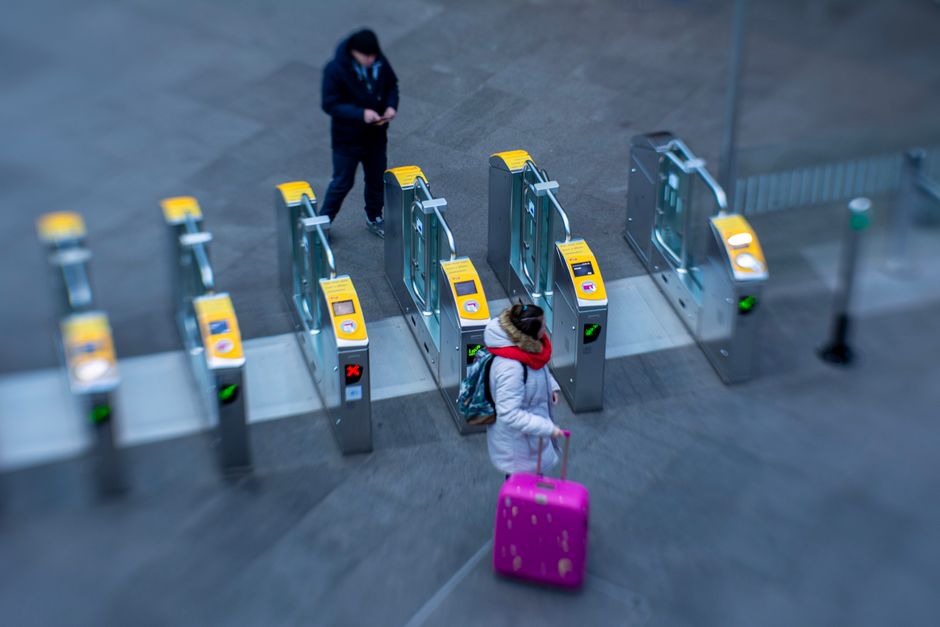
A reliable New York subway payment plan starts with the contactless card or wallet you actually carry, plus a current backup for the moment a tap fails. Before your first trip, check OMNY’s official guidance for your payment method, save current support information, and keep an OMNY card or another lawful payment option available.
At 7:42 on a rainy morning, Lina stood near a subway entrance in Manhattan with one suitcase, a phone at 18 percent battery, and a debit card that had already failed twice at a café. Her appointment across town could not move, and the next train was already filling the platform. She held her phone over the reader, waited for the expected sound, and saw a message she did not understand.
For a moment, the possible outcome was simple and unpleasant: no ride, a missed appointment, and a long walk in unfamiliar streets while her phone battery dropped. Lina had assumed that a foreign card would either work everywhere or fail everywhere. That assumption left her without a clear next step.
She opened her travel notes and found a saved OMNY support page, along with the location of a place where she could obtain an OMNY card if needed. The second tap still failed. This time, she did not keep guessing. She checked the card and wallet details, looked for a current backup, and treated the failed payment as a payment problem to investigate, rather than proof that her bank account, identity, or immigration status had an issue.
By the time she reached the station again, her plan was different. Her phone was charged, her wallet held a backup card, and she knew what information to check if the reader rejected the next attempt.
Start with the payment method you actually have
OMNY accepts contactless payment through compatible contactless cards and supported digital wallets, according to its official guidance. That gives travelers more than one way to pay for subway journeys, but it does not mean that every card issued in another country will work automatically.
Start by naming the exact payment method you plan to use:
- The physical bank card in your wallet.
- A card added to Apple Pay, Google Pay, or another supported digital wallet.
- An OMNY card.
- A payment method you can obtain from a current vending or retail option.
These methods can behave differently. A physical card may support contactless payments while the same account has not been added correctly to your phone. A wallet may use a device-specific token rather than the visible card number. A card may work in one setting and fail at a transit reader because the bank, card network, wallet, or reader handles the transaction differently.
Write down the card or wallet you intend to use before leaving your accommodation. If you are carrying several cards, choose one primary method and one backup. This avoids a common travel mistake: tapping different cards at different times and then losing track of which payment method was accepted.
Keep the same card or device available for later taps when the system’s fare rules depend on recognizing the payment method used earlier. OMNY’s detailed payment information explains how payment methods and travel records are handled, so read the current official guidance rather than relying on an old social media post or advice written for the former MetroCard system.
The old MetroCard habit can create confusion here. A traveler who used to buy a paper or magnetic-stripe transit card may expect every subway payment question to be solved at a vending machine. OMNY changes the starting point. Your first check should be the payment method in your hand, followed by the current official information for that method.
If you are budgeting for a move, add transit setup to your first-week planning. Your New York City cost-of-living budget guide can help you think through the wider cost of arriving, while this payment check handles one small but important part of getting around.
Check contactless and wallet compatibility
A contactless symbol on a card is useful evidence, but it is not a complete guarantee that a particular payment will succeed. Check the current OMNY contactless guidance before your first trip, then check the card or wallet itself.
For a physical card, confirm that:
- The card has contactless capability.
- The card is active and usable for purchases.
- Your bank has not blocked overseas or transit-related transactions.
- You know which account or card the payment will draw from.
- You can access your bank’s support channel if a payment is declined.
For a digital wallet, confirm that:
- The intended card has been added successfully.
- The phone or watch is charged.
- You know which card is the default payment card.
- You can authenticate the device if required.
- You understand whether you are tapping the phone, watch, or physical card.
Do not assume that moving a card into a wallet creates an identical payment identity. Treat the physical card and the wallet as two separate methods until you have checked how your bank and wallet present them. Once you choose one, use that same method consistently when possible.
A first tap should be a small test in a place where you have time to pause. That does not mean repeatedly tapping the reader if the first attempt fails. Repeated attempts with different cards can create uncertainty about which payment was accepted, and crowding around the reader makes it harder to read the message displayed.
Give the reader time to respond. Hold the card, phone, or watch near the contactless area as directed by the current OMNY instructions. Remove other contactless cards from the immediate area if you are using a physical card, because carrying several cards together can make it unclear which one the reader detects.
Your bank may use different language for a declined transaction, a pending transaction, and a blocked transaction. OMNY’s official reader guidance is the right place to check the message shown at the reader. Your bank’s own app or support channel is the right place to investigate the account. These are related checks, but they answer different questions.
A failed tap also does not tell you that a residence permit, visa, or other immigration document has a problem. Payment systems and immigration systems are separate matters. Do not turn one rejected transaction into a conclusion about your legal status, eligibility, or ability to remain in the country.
Lina’s first mistake was not using a foreign card. It was treating a single failed tap as a complete explanation. Her second mistake would have been trying every card in her wallet without recording what happened. A short written note would have been enough: physical card failed, wallet not tested, bank app shows no obvious block, backup required.
Prepare an OMNY-card or machine fallback
If your preferred contactless card or wallet fails, you need a backup that you can use lawfully and obtain through a current channel. OMNY provides guidance about the OMNY card and its available purchase or refill options. The official information can change, so check the current OMNY card page and payment information before relying on a specific machine, shop, location, or availability claim.
A practical fallback plan has three parts.
First, save the official OMNY card guidance while you have reliable internet. Do not depend on a search result that may lead to an old article or an unofficial forum. Save the page in your browser, and keep a short offline note with the name of the payment method and the official support route.
Second, identify how you could obtain or add value to an OMNY card if your primary payment method fails. The current OMNY information covers the relevant vending and retail options. Check the details close to your trip because locations, machine availability, and payment choices can change.
Third, carry enough flexibility to reach that fallback. This may mean keeping a second contactless card separate from the first, carrying a charged phone, or planning your first journey around a place where you can check the current payment information without rushing. The correct fallback depends on what you already have, where you are staying, and what the official options currently allow.
Do not buy an unofficial substitute because someone describes it as “the old MetroCard replacement.” Check the OMNY source directly. The name of a product, the way it can be purchased, and the way it can be used are details worth verifying before you are standing at a gate with luggage.
For a first week in New York, combine the transit fallback with the rest of your arrival plan. Aqee’s guide to your first week in New York for work covers the value of preparing small practical tasks before the first busy weekday. Transit payment belongs on that same list because a minor gap becomes much harder to solve when you are late, tired, or carrying bags.
Your backup does not need to be complicated. Keep one primary method, one tested alternative, and one current official source. That is enough to turn an uncertain tap into a decision tree.
Read a failed tap without guessing the cause
A failed payment is a signal to check the payment path. It is not a diagnosis.
Start with the reader message. OMNY publishes guidance about reader messages and payment status, so use that source to understand what the system is telling you. Note the exact wording if you can do so without holding up other passengers. A quick phone note is useful, especially if you need to contact your bank or OMNY support later.
Then check the payment method:
- Did you use the physical card, phone, or watch?
- Was the device unlocked or otherwise ready for payment?
- Did you hold one payment method near the reader without other cards pressed against it?
- Does the card or wallet show a pending, declined, or blocked transaction?
- Is there another payment method you can use now?
If the reader does not accept the first attempt, pause before trying again. Confirm that you are using the method you intended. If you switch from a phone to a physical card, write down that you switched. If you use an OMNY card, keep it separate from other contactless cards so you can identify it later.
Do not assume that an account notification means the ride was accepted. Do not assume that the absence of a notification means nothing happened. Payment status can require checking the relevant official guidance and your bank’s records. When the result is unclear, use the official support information instead of repeatedly tapping.
Avoid three conclusions that a single failed tap cannot support:
- It does not prove that every card from your country is incompatible.
- It does not prove that your bank account is closed or blocked.
- It does not prove that your visa, permit, or immigration record has an issue.
The practical question is narrower: can this specific payment method complete this specific transaction, and what current backup can you use if it cannot?
Lina returned to the same entrance later that morning with her phone charged and her second card separated from the first. She checked the reader message instead of tapping in a panic. When her wallet method failed again, she used the backup she had already identified. The important change was not that the city had become easier. She had stopped making one failed tap carry five different meanings.
Keep current route and support information available
Payment planning and route planning belong together, especially during a first trip. A payment method may work perfectly, but a closed entrance, an unfamiliar transfer, or a low phone battery can still turn a short journey into a stressful one.
Before leaving, keep these items available:
- The current OMNY contactless payment guidance.
- The current detailed payment information.
- OMNY card guidance.
- Current vending or retail information.
- OMNY reader messages and payment status guidance.
- Your bank’s support channel.
- Your destination address and a basic route note.
The official OMNY pages listed above are the sources to check for current payment rules and options. Transit information can change, and a page written for a previous fare system may be accurate in one sentence and outdated in the next. Use the source date and current page content where available, then verify details again before a major appointment or airport journey.
Save information before you need it. Underground stations and crowded streets are poor places to search for a long explanation. A saved page, screenshot, or short note can reduce the pressure while you work out the next step.
Your route note does not need to include every possible transfer. Record the destination, the general direction, and the point where you can stop safely if payment does not work. If you are new to the city, give yourself time for a fallback. A plan that works only when every tap, transfer, and connection is perfect is a fragile plan.
Aqee is built around these small settlement decisions: the tasks that seem minor until they collide with a deadline, a dead phone, or a queue. You can turn this article into a wider arrival routine by choosing one action for each area of your move, including transport, documents, money, housing, and local support.
What to do next
Before your first New York subway trip, complete this short preparation:
- Choose the physical card, digital wallet, or OMNY card you plan to use.
- Check the current official OMNY guidance for that method.
- Test that your phone, watch, or card is ready for contactless payment.
- Save the OMNY card, vending, retail, reader-message, and support information.
- Choose a backup payment method and keep it separate.
- If a tap fails, read the message, record the payment method, check your bank, and use the current official fallback information.
- Avoid drawing account or immigration conclusions from one failed transaction.
Create an Aqee local-settlement checklist and place “New York transit payment fallback” beside the other tasks you need before your first week begins. On Lina’s next trip, the difference was one saved page, one separate card, and enough time to stop guessing.
Sources
- OMNY, contactless payment guidance, checked 2026-09-24.
- OMNY, detailed payment information, checked 2026-09-24.
- OMNY, vending-machine payment information, checked 2026-09-24.
- OMNY, OMNY card guidance, checked 2026-09-24.
- OMNY, reader messages and payment status, checked 2026-09-24.
Related Aqee guide
Keep the practical follow-up in your wider move plan with Aqee’s New York first-week arrival guide.


