
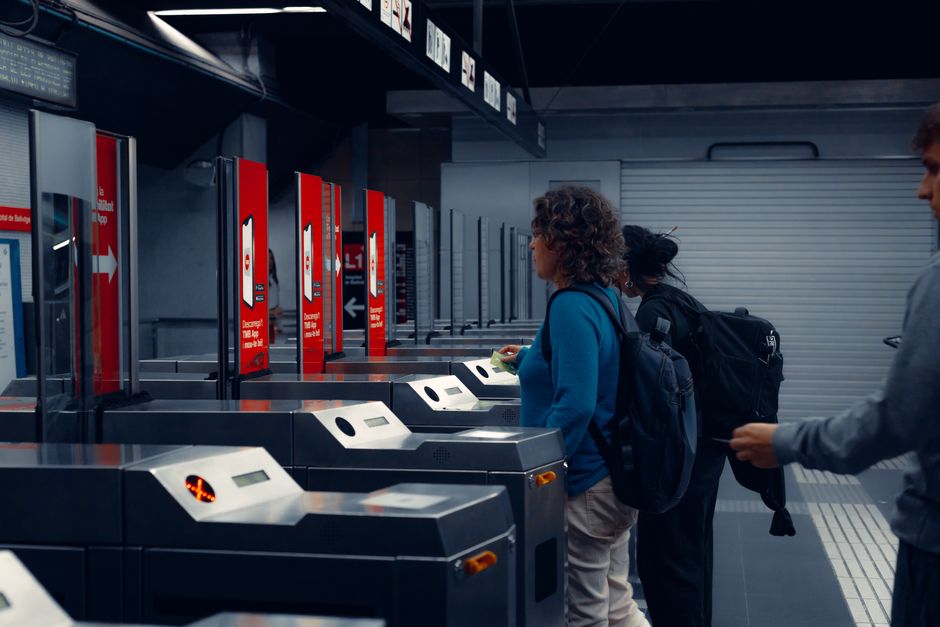
Before you travel on the Doha Metro, decide whether you need Standard or Goldclub travel, then check Qatar Rail’s current card, fare and validation guidance. Buy or top up the appropriate travel card at an approved sales point, and tap in and out on every journey.
At 7:40 on a Sunday morning, Lina stood inside a Doha Metro station with her passport in one hand and a phone showing a half-finished moving checklist in the other. She had arrived in Qatar three days earlier for a university programme. Her accommodation was confirmed, her bags were unpacked, and she had already saved the station she needed for campus.
The problem was the card.
Lina had read two different explanations online. One described a Standard travel card. Another mentioned Goldclub access. A third page discussed fares and daily limits without making clear which information applied to the card she was considering. The queue behind her grew while she tried to decide whether the difference was a ticket type, a travel class, or a separate station service.
If she chose incorrectly, she might need to leave the queue, find another sales point, or miss the orientation session that morning. The possibility was small, but it was real. She had already lost one appointment during her move because she treated a transport detail as something she could work out at the last minute.
The safer approach is to separate four decisions: your planned travel class, the card you need, where you can buy or top it up, and how you will validate each journey.
Start with the planned travel class
The first decision is the space in which you plan to travel. Qatar Rail’s fares policy distinguishes between Standard travel and Goldclub travel. Treat those as travel classes before you think about the card itself.
Standard is the ordinary travel option for passengers using the network under the standard fare rules. Goldclub is a separate class with its own access conditions and fare treatment. The important practical point is that a Goldclub travel card should not be understood as a general upgrade that applies automatically to every passenger or every journey. Check the current Qatar Rail guidance before buying one.
This matters because new arrivals often combine two different questions:
- Which class do I want to use?
- Which card or sales point gives me access to that class?
Answer the first question before the second. If you expect to use Standard travel for your regular journeys, begin with the Standard option in the current Qatar Rail information. If you are considering Goldclub, confirm the current conditions, price and availability directly through Qatar Rail before travelling.
Your choice may depend on your daily routine. A student travelling to classes, a new employee commuting across Doha, and a visitor making occasional trips may all use the same metro system while making different planning decisions. You may also change your mind after living in the city for a week. That is fine. The aim is to make your first purchase with the right information, rather than choosing under pressure at a station gate.
Keep the planned class written in your relocation notes. A simple entry such as “Doha Metro, Standard travel” or “Check Goldclub suitability before purchase” can prevent confusion when you are tired, carrying luggage or trying to arrive somewhere at a fixed time.
Aqee is designed around this kind of preparation. A relocation plan can separate transport setup from visa tasks, housing, registration and local errands, so a small decision does not disappear inside a much larger moving checklist.
Compare the travel-card options
Once you know the class you are considering, compare the current travel-card options using Qatar Rail’s own fares policy. The card type, fare rules and travel class are connected, but they are not interchangeable terms.
Read the policy for the details that affect your situation:
- the available travel-card categories;
- the fare treatment for Standard and Goldclub travel;
- how journey validation works;
- whether daily capping applies under the current policy;
- any conditions attached to use, purchase or replacement.
Daily capping deserves particular attention. Qatar Rail’s fares policy includes guidance on journey validation and daily capping, but you should check the current document for the exact rules that apply to your card and journeys. A cap is useful only when the system records your trips correctly. It does not remove the need to tap in and tap out.
This is where Lina’s confusion began to clear. She had been comparing cards by name, as though the name alone would tell her what she could do. The better comparison was practical: class first, card second, validation every time.
Do not rely on a social media comment, an old relocation article or a screenshot from another passenger as your final authority. Doha’s transport guidance can change, and an older explanation may omit a condition that matters to your card. Use the current Qatar Rail fares policy and customer information when making the purchase.
You may also want to record the date you checked the guidance. This is especially useful if you are planning a longer stay and expect to renew, replace or change your travel card later. Your note does not need to be complicated:
“Checked Qatar Rail fares policy on [date]. Planned class: Standard. Card and sales point to confirm at station.”
That record gives you a reference point without pretending that a rule will remain unchanged forever.
Goldclub deserves an extra check because the name can create assumptions. Do not infer access rights, availability or fare treatment from the word “Goldclub” alone. Confirm what Qatar Rail currently says about the class, the card and the places where it can be purchased or handled.
If you are travelling with family members, friends or colleagues, make the comparison for each person. One person may use Standard travel while another has a different eligibility or preference. Keeping everyone’s choice clear avoids a last-minute discussion at the gate.
For wider relocation planning, the same habit applies to permits and visas. Aqee’s guide on building a country-specific visa and permit plan before Day 0 follows the same principle: identify the rule that applies to you, check the responsible source, and turn it into a dated task.
Choose the current sales point
The card decision is only useful if you know where to complete it. Qatar Rail’s current customer information should guide you to the appropriate sales point for the card or service you need.
A station may have more than one way to access travel information or buy a card, but do not assume that every location provides every service. Goldclub-related purchases or support may require particular arrangements. Confirm the current station or sales-point guidance before setting out, especially if you are travelling from a distant neighbourhood or working around a class, airport transfer or appointment.
The Qatar Rail pocket map can help you understand the network and plan your route, while the fares policy and customer information help you plan the card itself. Use them for different jobs. A map can show you where the system goes. It does not, by itself, confirm the current card rules or sales availability.
Before leaving your accommodation, save the following information:
- the station or sales point you plan to use;
- the travel class you intend to select;
- the card category you are checking;
- the route to your first destination;
- Qatar Rail’s current service information.
Take a screenshot or keep the relevant official page available if your connection may be unreliable. The point is not to carry a large folder of documents. It is to avoid depending on memory while standing in a busy station.
Lina eventually moved away from the queue and checked the current Qatar Rail information before purchasing. That decision cost her a few minutes, but it prevented a more expensive mistake. She confirmed that her first journeys would use Standard travel, identified the appropriate way to obtain the card, and wrote the choice into her moving checklist.
The next morning, she did not need to repeat the research. Her card was ready, her route was saved, and the remaining uncertainty had a place in her notes instead of taking over the station.
Use the card correctly on the network
A travel card only works as planned when you use it correctly. Qatar Rail’s fares policy sets out journey validation requirements, including tapping at the relevant points of the journey. Tap in before entering and tap out when you finish, following the network’s current instructions.
This routine is easy to underestimate. New arrivals often focus on the visible part of the trip: finding the platform, identifying the right direction and reaching the destination. The tap-in and tap-out steps happen at the edges of the journey, so they are the steps most likely to be forgotten when you are rushing.
Build them into a simple sequence:
- Have the card ready before you approach the gate.
- Tap in using the designated reader.
- Keep the card accessible during the journey.
- Tap out at the end of the journey.
- Check for any visible confirmation or issue before walking away.
If a gate does not respond as expected, pause and ask station staff for help. Do not keep trying random readers, follow another passenger through a gate, or assume the system will correct the journey later. A validation problem is easier to address while you are still at the station.
Daily capping also depends on accurate journey records. If you forget to tap out, use the wrong card or experience a system issue, the fare outcome may not match what you expected. Qatar Rail’s current fares policy is the right place to check the applicable rule, and the customer charter explains the service standards and passenger support expectations.
Keep your card separate from other contactless cards if your wallet makes accidental taps possible. Present the intended travel card clearly at the reader. This small habit can reduce confusion, particularly when you are carrying a bank card, an access card and several identification documents together.
Your first week in Doha is a good time to test the routine on a short, non-urgent journey. You will learn how the gates feel, where to stand, how long the station walk takes and what to do if the reader does not accept the tap. That practice is more useful than discovering the process while trying to reach an important appointment.
Lina used her card for a short trip after orientation. At the exit, she stopped, tapped out and waited for the gate to confirm the action. Later that week, the same movement became automatic. She could concentrate on finding a grocery shop, remembering the name of her new street and noticing which parts of Doha felt familiar.
That is the real payoff of getting the small transport details right. The city still feels new, but one part of the day no longer needs constant attention.
What to do next
Use the following order when planning your Doha Metro travel card:
- Decide whether your planned travel is Standard or Goldclub.
- Read Qatar Rail’s current fares policy for the card, fare, validation and daily-capping rules that apply.
- Check the appropriate current sales point before travelling to the station.
- Save the pocket map and current service information for route planning.
- Tap in and tap out on every journey.
- Keep a short note of the card type, travel class and date you checked the guidance.
If you are unsure about a requirement, ask Qatar Rail or station staff before completing the purchase. This article is a preparation guide, not legal or official transport advice. Current operator information takes priority over any relocation article, forum post or remembered instruction.
Create an Aqee local-settlement checklist with one transport task for your first day: confirm the travel class, check the current card guidance and complete one practice journey. You can then add the next practical steps, such as locating a supermarket, saving your regular station and recording any local routine that makes the city easier to navigate.
A move becomes more manageable when decisions stop competing with one another. Visa conditions belong in the permit plan. Housing belongs in the arrival plan. Doha Metro travel belongs in a small, clear transport task with the current Qatar Rail rules attached.
Sources
- Qatar Rail, fares policy, checked 2026-09-24.
- Qatar Rail, journey validation and daily capping, checked 2026-09-24.
- Qatar Rail, customer charter, checked 2026-09-24.
- Qatar Rail, Doha Metro and Lusail Tram pocket map, checked 2026-09-24.
Related Aqee guide
Keep the practical follow-up in your wider move plan with Aqee’s local-settlement guide.


