
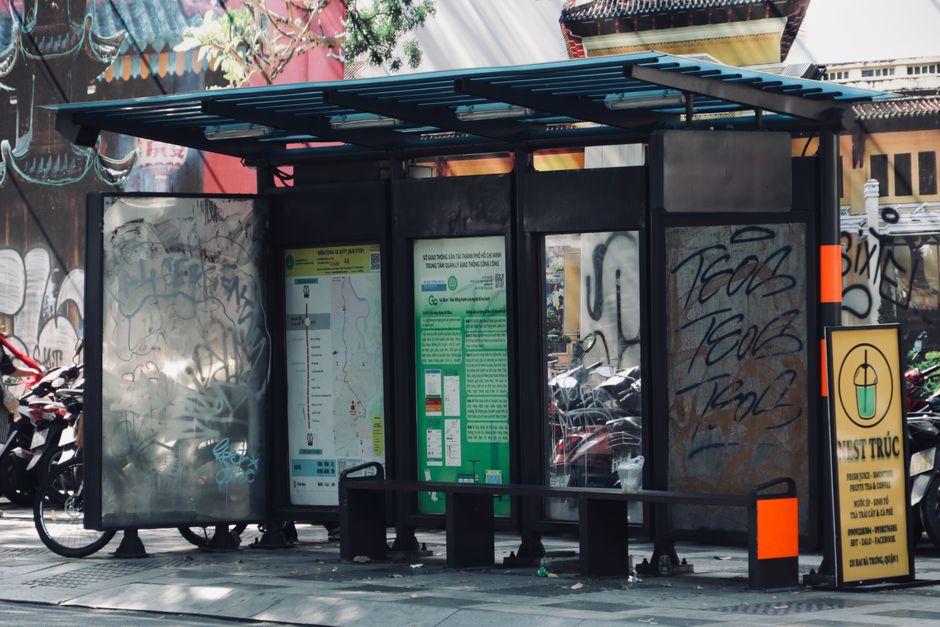
One useful errand can make Auckland feel more manageable when you treat the trip as a sequence you can repeat: prepare, ride, arrive, and retrace your way home. The real win is knowing what to do next time without rebuilding the whole plan from memory.
At 8:12 on Monday morning, Leila stood beside an unfamiliar bus stop holding her AT HOP card in one hand and a document folder in the other. She was a composite newcomer, three weeks into a move to Auckland, still living from two suitcases and saving every useful address as a screenshot.
Her appointment was necessary. Missing it could delay the next part of her settlement paperwork, and the message confirming her slot offered little room for improvisation. A bus approached. Leila checked the destination display, checked her phone, then checked the display again.
Behind her, two commuters stepped forward without hesitation.
She stayed where she was.
Turn one journey into four small decisions
The intimidating version of Leila’s morning was “cross Auckland for an important appointment.” That thought bundled transport, timing, paperwork, navigation, and the fear of getting stranded into one heavy task.
The practical version had four decisions:
- Which stop should she start from?
- What would tell her she was travelling in the right direction?
- What landmark would help her find the appointment after getting off?
- How would she identify the correct stop for the return trip?
She had already saved the destination and taken a screenshot of the journey before leaving home. That mattered now because her mobile connection was patchy and the map kept jumping back to her current location.
The next bus arrived. Its destination matched her saved journey. Leila tagged on with her AT HOP card, sat near the middle, and placed the document folder flat across her knees.
She was moving, but the doubt had not gone anywhere. If she missed the stop, she might arrive after her appointment time. If she got off too early, she did not know how long the walk would take. The folder suddenly felt less like paperwork and more like a countdown.
This is why arrival planning works best as a clear sequence. A first week becomes easier when each task has an order, especially when one missed step can affect the next.
Save clues your future self can recognise
Leila stopped trying to follow every street on the map. Instead, she looked for three things she could recognise again: a bright shop sign near the stop, the shape of the intersection, and the direction she turned after stepping off the bus.
Those details were more useful than trying to memorise the whole journey.
When the bus reached the area shown on her phone, she tagged off and stepped onto the pavement. For a moment, every direction looked plausible. Then she saw the shop sign from the street-view image she had checked the night before.
Left at the intersection. Straight past the small row of cafés. The appointment entrance appeared farther along the block.
Leila reached the reception desk with enough time to take out the required documents and put them in the order requested. The appointment went ahead.
The turn in her morning came here, but it was smaller than relief. Before walking away, she paused outside and made a return note:
“Bus stop across from the bright sign. Same intersection. Check direction before tagging on.”
She also photographed the stop from the angle she would approach it. No polished travel diary. No elaborate system. Just a clue she could use while tired.
An offline note can carry surprising weight when your connection fails or stress makes familiar instructions hard to follow. Mina’s Seoul arrival story shows what can happen when that note is missing.
Make the return trip part of the errand
A necessary appointment does more than clear one item from a relocation checklist. It can teach you a route, a payment habit, a timing buffer, and a small patch of the city.
Leila used the trip home to notice what the anxious journey out had hidden. She spotted a supermarket near the stop, a shaded place to wait, and the side of the street she needed for the return direction. She checked her AT HOP card before the bus arrived, rather than when people began boarding.
Then she tagged on and sat down.
Halfway home, she realised she was no longer watching the map continuously. She recognised the turn near her neighbourhood and knew her stop would come after it. The trip had changed from an unknown route into a short chain of cues.
Repeat the route before you forget it
The useful final step happened that evening. Leila opened her saved journey and replaced the vague label “appointment” with something she would understand later: “City errand route, bus stop by bright sign.”
She added the supermarket as a nearby reference point and kept the return-stop photo. The next time she needed to travel into that part of Auckland, she would already have a starting point.
That is how a new city becomes usable. One route connects to one errand. One errand leaves behind a landmark. The landmark gives you enough confidence to go back.
On Tuesday morning, Leila passed the same local bus stop on her way for coffee. She glanced at the sign, felt the AT HOP card in her pocket, and knew which bus she would check for next time.