
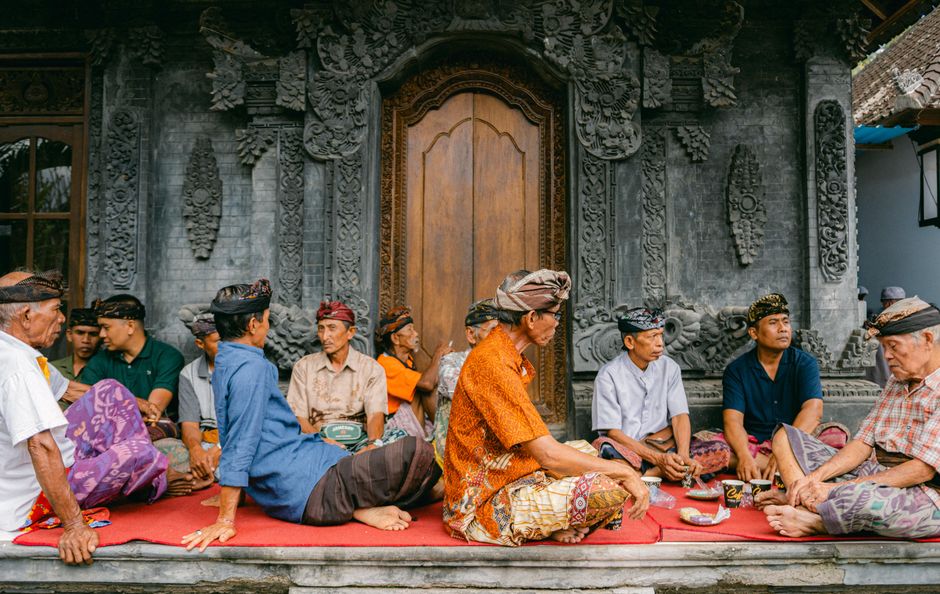
A banjar is Bali’s local neighbourhood association, coordinating community life, ceremonies, shared spaces, and practical matters among residents. Understanding the banjar helps newcomers read how their neighbourhood works, who carries responsibility, and how to participate respectfully.
In 1962, Jane Jacobs faced a plan that would have driven the Lower Manhattan Expressway through established New York neighbourhoods. Robert Moses had institutional power behind the proposal. Jacobs and local residents had something the plans could not show: close knowledge of the streets, businesses, homes, and daily relationships that made those neighbourhoods function.
The outcome was uncertain for years. Jacobs helped organise residents against the expressway, and the proposal was eventually cancelled. Anthony Flint documents the campaign in Wrestling with Moses. The lesson reaches well beyond New York: a neighbourhood is more than its popular venues and visible infrastructure. Its real operating system lives in local relationships.
The neighbourhood structure behind everyday Bali
In Bali, a banjar connects households within a defined local community. It helps coordinate ceremonies, communal responsibilities, meetings, shared facilities, and neighbourhood concerns.
You may notice a banjar hall, known as a bale banjar, near your accommodation. You may also encounter temporary road activity connected to a ceremony, neighbours gathering for collective work, or announcements that everyone nearby seems to understand before you do. These moments can look spontaneous from the outside. Usually, there is a local structure behind them.
The exact role and customs of a banjar can vary by location. A neighbourhood in Denpasar will not necessarily operate like one near Ubud or in a village elsewhere on the island. That makes respectful local orientation more useful than a universal Bali checklist.
For Balinese residents, banjar participation can carry social, cultural, and practical responsibilities. A foreign renter or temporary resident usually occupies a different position. Understanding the institution does not grant automatic access, authority, or membership. It helps you behave like someone who knows they have entered an existing community.
Why coworking recommendations only take you so far
The coworking crowd can tell you where the Wi-Fi is reliable, which café tolerates laptops, and where to find a good lunch after a morning of calls. Those recommendations are useful. They describe the layer of Bali designed for easy discovery.
A banjar helps explain the layer underneath.
When a local ceremony changes access to your street, a neighbourhood contact may understand what is happening better than a map app. When you are unsure how rubbish collection works, where parking causes problems, or why people are gathering nearby, your host, landlord, or another trusted local contact can give you the context a group chat cannot.
The difference is similar to what Jacobs understood in New York. Outsiders saw blocks on a planning map. Residents saw the network holding daily life together. In Bali, a list of popular places can help you enjoy an area. Local relationships help you live there with fewer misunderstandings.
This matters especially when you are settling in for months rather than visiting for a week. You are sharing lanes, noise, access, and common space with people whose routines did not begin when you arrived.
How to learn without treating the banjar as an attraction
Start with the person who connects you legitimately to the neighbourhood. That may be your host, landlord, accommodation manager, Indonesian colleague, or a neighbour who has already introduced themselves.
Ask simple, practical questions:
- Is there anything residents should know about ceremonies or community activity nearby?
- Who should I contact if access to the property changes?
- Are there local expectations around parking, rubbish, noise, or shared space?
- If I want to attend a public event, how should I dress and behave?
- Are photographs welcome, restricted, or best avoided?
Listen before offering opinions. Do not walk into a meeting, ceremony, or communal space because it looks interesting. Do not assume every gathering is public. If you receive an invitation, ask what participation means and follow the guidance you are given.
A small amount of preparation helps too. Save your accommodation address in a form you can show someone locally. Keep your host’s contact details available when you leave the property. If arrival logistics already feel chaotic, the same principle appears in what happens when your address will not load and your phone has 3% battery: local context is most useful when you can still access it.
Settle through relationships, not recommendation lists
Your first week can easily become a collection exercise: cafés, gyms, beach clubs, delivery apps, weekend trips. Add one quieter task. Learn who can explain your immediate neighbourhood.
Ask your host about the banjar. Notice the local hall. Learn how residents communicate when community activity affects the street. Find out which spaces are public and which require an invitation.
Jane Jacobs helped protect Lower Manhattan because she treated neighbourhood knowledge as essential evidence. Bring that same respect to Bali. The most useful local tip may have nothing to do with where to eat. It may be knowing whom to ask before you park in the wrong place, interrupt a ceremony, or mistake a living community for scenery.