
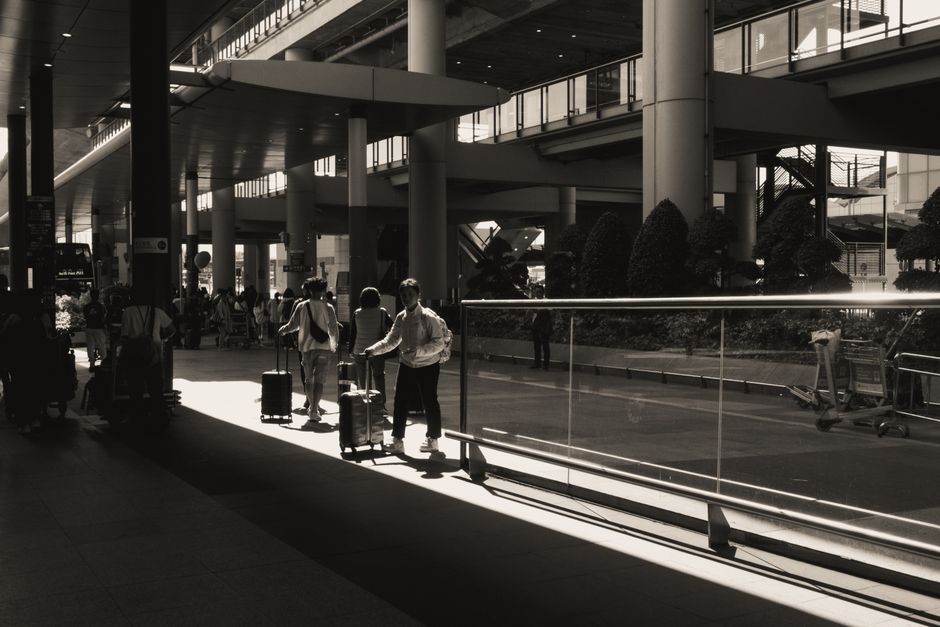
Choose the MRT only when your flight has landed early enough to clear immigration, collect your bags, and reach the station before the last train, with a practical walk from your destination station to your actual door. Take a taxi when the last-train margin is thin, you have heavy luggage, your address needs another ride after the station, or you arrive too tired to troubleshoot a new city at night.
At 12:18 a.m., Lina stood beside the baggage belt at Changi with a hard-shell suitcase, a backpack, and the key code for a room she had rented in Singapore. The belt had stopped. Her suitcase was still missing.
She had planned to take the MRT because it felt like the sensible first-night choice. By the time her case finally appeared, she could picture the bad ending clearly: arriving at the station after the last train, with no local SIM working yet and no idea where to wait safely with her bags. The cheap route would have become a stranded route.
A taxi queue, a working card, and a direct ride to the building changed the calculation. Later, outside the correct entrance with her suitcase beside her, Lina had one less first-night problem to solve.
Start with the time you will reach the station, not your landing time
A flight that lands before midnight does not mean you will be on a train before midnight. The time that matters is when you are actually ready to enter the MRT, after immigration, baggage collection, any customs checks, finding your way through the airport, and the usual small delays that feel larger when you have slept badly on a plane.
Check the official last-train information close to your travel date. Then give yourself a buffer. Flights can arrive late, gates can be far from arrivals, and a bag can be among the last ones out. If your plan works only when every step goes perfectly, book the taxi or keep it as your default backup.
This is especially useful on a first move, when your phone may be low on battery and you have no idea how quickly you will recognise the correct exit outside a station. A relocation plan gets easier when it accounts for the boring details before they become midnight decisions.
Let your luggage decide how much friction you can handle
The MRT can be a good fit when you have one manageable bag, a backpack, and accommodation close to a station. It gives you a first look at the city without the pressure of navigating traffic from the airport.
The calculation changes with two large suitcases, a stroller, sports equipment, or the boxes that somehow seemed sensible when you packed them. You may still make the train. The harder question is what comes after it: station lifts, platform changes, a walk in humid weather, a lift that requires another building entrance, and the moment you realise your map pin sits on the opposite side of a busy road.
A taxi has a higher cost, but it buys a direct handoff from airport to address. On a first night, that can be worth more than saving money on a route that ends several blocks from where you need to sleep.
Before you fly, look at your final door on a map. Find the nearest station, estimate the walk with your actual luggage in mind, and see whether the building has a clear entrance. “Near the MRT” can still mean a long, confusing final stretch after midnight.
Plan for the last step from station to building
The airport journey has three parts: reaching the MRT, taking the train, and getting from the destination station to your accommodation. People often plan only the middle part.
If the final walk is short, well understood, and you arrive while public transport is still running, the MRT can feel calm and straightforward. If you need another late-night bus, a ride-hailing pickup, or a long walk through an unfamiliar area, a taxi from Changi may remove several chances for the plan to unravel.
Lina had originally searched her room’s neighbourhood, not the building entrance. The station looked close. Once she checked the walking route properly, she saw a stretch with luggage she would not have wanted to navigate after midnight. The taxi was not a luxury choice that night. It was the route that got her to the right door with enough energy to find the key code and sleep.
Keep the accommodation host’s contact details saved offline, too. A dead battery or patchy connection should not leave you outside a building trying to remember which booking message contained the entry instructions.
Give yourself a simple arrival rule
Use a rule you can follow while tired: take the MRT if you can reach it with a comfortable buffer before the last train and can complete the final leg without improvising. Take a taxi if either part is uncertain.
You do not have to treat the taxi as a failure to travel like a local. Your first night has a different job from your second week. It needs to get you, your bags, and your documents safely to the place where you will wake up.
Once Lina was inside, she put her passport, tenancy details, and arrival papers in one folder before sleeping. The next morning, she could start learning Singapore with coffee and daylight, rather than retracing a midnight route with a suitcase in hand.


