
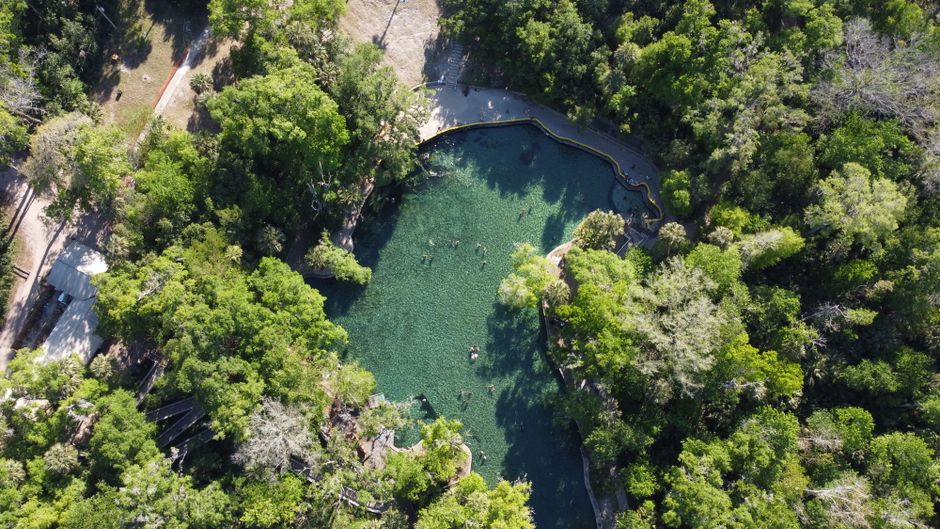
Make your first evening in Austin feel manageable by choosing one small, community-recommended quest: visit Barton Springs Pool in Zilker Park. Completing a simple outing gives you a visible first win, helps you learn the city, and replaces “I know nobody here” with “I know one place.”
In May 2000, Dave Ulmer hid a black bucket in the woods near Beavercreek, Oregon. Satellite navigation had just become more accurate for civilian users, but nobody yet knew what people might do with that access. Ulmer posted the coordinates online as an experiment and invited others to find the container.
They did. Visitors recorded their names, exchanged objects, and shared the experience with people who followed. Smithsonian Magazine documents Ulmer’s experiment as the beginning of geocaching, a worldwide activity built around turning unfamiliar coordinates into achievable quests.
Your first night in Austin carries the same small uncertainty. You have an address, a phone, and perhaps a room full of boxes. That information tells you where you are. It does not yet make the city feel like yours.
A short quest can start changing that.
Give the evening one finish line
After an international move, “settle into Austin” is too large to act on. It contains dozens of hidden tasks: learning the streets, finding groceries, handling documents, watching expenses, meeting people, and working out which local advice is worth following.
Shrink the mission. For tonight, the finish line is Barton Springs Pool, the spring-fed swimming spot inside Zilker Park.
Check current access information before leaving, pack what you need for a swim if conditions suit you, and save the route so you can find your way back. If swimming is unavailable or you are too tired, the quest still works as a visit to the surrounding park. The useful part is leaving your new address with one clear destination.
This is how a blank map begins to gain meaning. You notice which direction feels like downtown. You learn how long it takes to reach Zilker Park from home. You find a landmark you can recognize later. Perhaps you spot somewhere to return with a book or with the first person you meet.
Those details look small. On Day 0, they count.
Turn exploration into visible progress
Ulmer’s hidden bucket gave people something ordinary maps could not: a reason to move toward one precise point and a way to mark the attempt as complete. The coordinates became an experience, and each visitor’s log showed that someone else had managed it before.
Use the same structure for your first Austin quest. Give it three parts:
- Reach Barton Springs Pool or the surrounding area.
- Record one useful local detail, such as a nearby entrance, a shaded place to sit, or a shop you may want to revisit.
- Mark the quest complete when you return home.
Take one photo if you want, but do not turn the outing into a performance. The reward is evidence that you can leave your unfamiliar front door, navigate one piece of Austin, and come back.
Aqee treats relocation as a series of steps from Day 0 to settled life. That structure matters because progress can disappear inside a move. You may spend an afternoon comparing residence permit requirements or organizing expiring documents and still feel as though nothing changed. A completed quest makes the change visible.
Tomorrow’s win might be locating a grocery store. The next could be testing the route to campus, finding a quiet place to work, or identifying where you need to handle a local registration task. One finished step gives the next step a starting point.
Let people further ahead shorten the learning curve
Community recommendations are especially useful during your first weeks because locals and longer-settled newcomers already know which details maps leave out. They can tell you what is worth bringing, what to check before setting off, and which nearby stop pairs naturally with the trip.
Treat that advice as a shortcut, then verify anything operational before acting. Opening arrangements, entry conditions, transport details, and local procedures can change. Friendly guidance helps you ask better questions; current official information helps you plan safely.
This balance also protects you from trying to solve the whole city alone. Ask for one recommendation at a time: a calm place to sit, an easy first outing, or a practical errand near somewhere pleasant. Specific questions are easier to answer, and the answers are easier to use.
If you want another example of this approach, an Auckland errand can turn an unknown route into a repeatable journey. The city changes, but the useful pattern stays the same: complete one real trip, notice what you learned, and reuse it.
Build your first Austin anchor
By the time geocaching spread beyond Ulmer’s original container, the idea had become larger than any single object in the woods. Each completed find gave people a record of where they had been and a reason to attempt another.
Your Barton Springs quest can become the first entry in a similar record. Add the place to your map. Note what you would do differently next time. Then choose the next small destination before the evening ends.
The boxes may still be waiting when you return. You may still know nobody nearby. But Austin now contains one place you reached on purpose, one route you completed, and one decision already made for tomorrow.