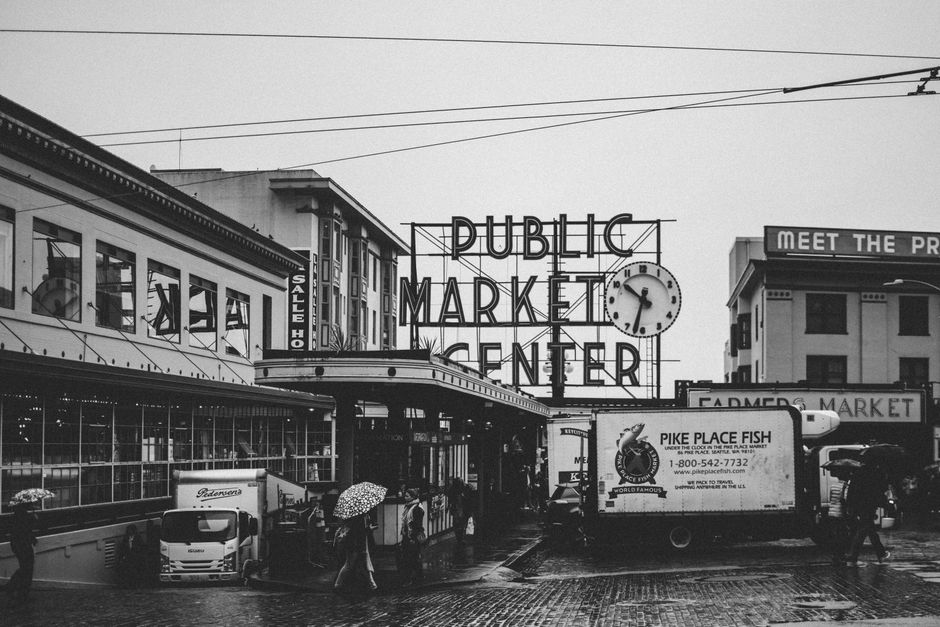
Use Pike Place Market as a familiar anchor on your first wet morning in Seattle, then complete one practical Day 0 task: save your temporary address exactly as you will enter it on local forms. One recognizable place and one finished admin task can make a new city feel more manageable.
In April 1970, Apollo 13’s crew faced a dangerous mismatch in space. The command module’s carbon dioxide filters were square, while the lunar module needed round ones. With carbon dioxide rising and no ready-made adapter aboard, NASA engineer Ed Smylie and a team in Houston had to build a workable connection using materials available on the spacecraft.
The outcome was still uncertain. The team on Earth had to create instructions that the astronauts could follow with the same limited materials, then trust that the improvised device would fit and function far from Houston. NASA’s history of Apollo 13 documents how the crew assembled the adapter and brought carbon dioxide back under control.
Your Seattle address carries much smaller stakes, of course. The shared lesson is precise and useful: when one system expects information in a particular shape, getting the format right can prevent trouble later.
Let Pike Place become your first familiar point
A wet Seattle morning can make the city feel like a collection of reflections, unfamiliar corners, and people who already know where they are going. Pike Place Market gives you a place name you can recognize immediately.
Go there without turning the visit into a mission to understand the whole city. Notice the entrance you used. Find a sheltered spot. Buy something warm if you feel like it. Learn the shape of one short walk nearby.
The fish-throwing area attracts attention and can become crowded, so keep clear of that aisle if you want a calmer first visit. You do not need to collect every famous Seattle experience before lunch. Today, the market has a simpler job: it gives your mental map a starting point.
This is how a city begins to feel familiar. A place you once searched for becomes a place you can return to.
Small routines help, too. The recent move may have replaced your usual bakery, park, or gym with a blank map. Choosing one nearby place to revisit gives the week some structure. The same idea appears in the story of a canvas bag and the routine it helped build: ordinary objects and repeated stops can help a new environment feel less temporary.
Save the address before you need it
Once you are somewhere dry, open the booking confirmation, rental agreement, or message from your host that contains your temporary address. Copy the address from the most reliable document you have.
Save one primary version with every supplied element in a consistent order:
- Recipient name, if needed
- Building or street number and street name
- Apartment, unit, or room detail
- City and state
- Postal code
- Country
Do not guess at missing details. If two documents show different spellings, unit numbers, or postal codes, mark the difference and confirm it with your host or accommodation provider. Keep the original documents so you can check where each version came from.
Name the note clearly, such as “Seattle temporary address, form version.” Add the accommodation contact beneath it. If your mailing address differs from the place where you are physically staying, keep those versions separate and label them plainly.
You may later need an address for local forms, banking, employment records, deliveries, or other settling-in tasks. Each organization can ask for different evidence, and temporary accommodation may not satisfy every requirement. Saving the address does not prove eligibility. It gives you a consistent starting point and makes gaps easier to spot before you are standing at a counter or filling out a time-sensitive form.
For a closer look at what temporary housing information may unlock, and where it may fall short, see this guide to mapping temporary address requirements. The rules differ by location, but the preparation habit travels well.
Give Day 0 a finish line
The first day in a new country invites an impossible checklist. Find your way around. Understand every document. Set up a local life. Feel at home.
Shrink the target.
Today’s finish line can be one saved address that matches its source document. Check the street spelling, unit detail, city, state, postal code, and country. Save a screenshot or offline copy of the supporting document if you can do so securely. Keep sensitive identity documents out of shared notes.
Then stop. Mark the task complete and return to the city.
Smylie’s team in Houston did not solve every Apollo 13 problem with one adapter. They solved the mismatch in front of them, using a format the spacecraft could accept. Your temporary address works the same way: one verified piece of information, prepared before another system asks for it.
Tomorrow may bring another form, another queue, or another unfamiliar neighborhood. This morning, you found Pike Place and created one reliable reference you can use again. That is enough progress for Day 0.