

If you’re moving to Spain, you’ll probably hear the same three letters again and again: NIE.
You may need one to deal with a bank, sign a contract, complete certain administrative procedures, work, buy property, or handle other matters involving Spanish authorities. But the NIE is also one of the most misunderstood parts of moving to Spain.
What exactly is it? Do you need one before arriving? Is it the same as a residence permit? Where do you apply? And what documents do you need? Here’s what you need to know about getting an NIE in Spain.
Table of Contents
What is an NIE in Spain?
NIE stands for Número de Identidad de Extranjero, or Foreigner Identity Number.
It is a personal, unique identification number assigned to foreigners who have an economic, professional, social or other connection with Spain. The Spanish Ministry of the Interior describes it as the identifier used for foreigners in documents and procedures involving the Spanish administration.
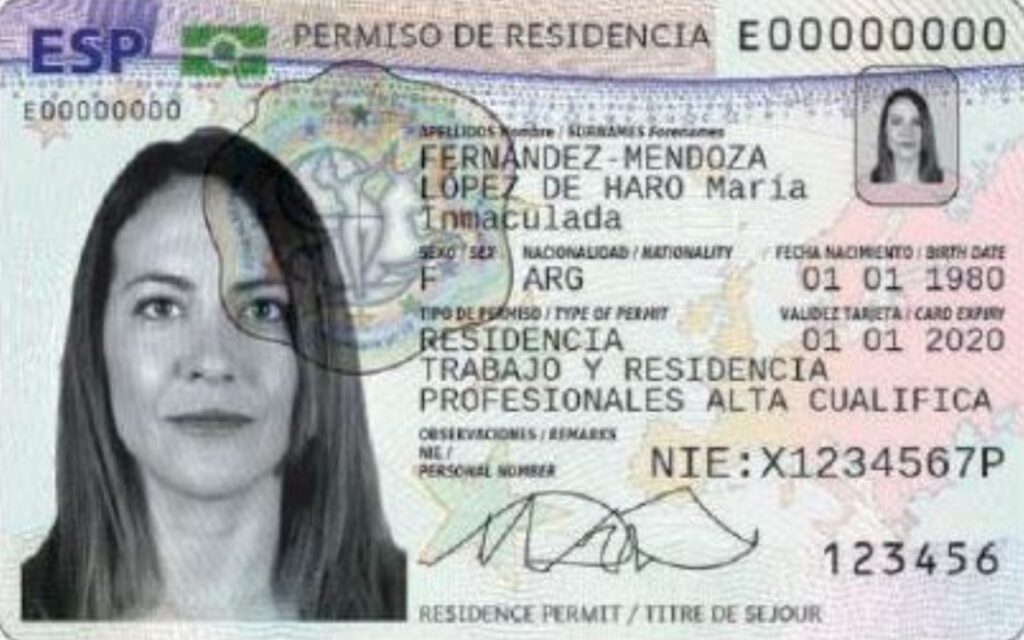
The number is unique to you and does not change simply because you move to another city or change your circumstances. You can think of the NIE as your foreign-identification number in Spain. But there is an important distinction: An NIE is not a residence permit.
Having an NIE does not, by itself, give you the right to live in Spain or prove that you are a resident. Spanish consular guidance explicitly states that an NIE obtained through a consulate allows you to carry out administrative procedures in Spain but does not itself authorize residence.
That distinction is important because NIE, TIE and residency are three different things.
What is an NIE used for?
Your NIE is used to identify you when you interact with Spanish authorities and in other situations involving your economic, professional or social affairs in Spain.
Depending on your circumstances, you may encounter your NIE when dealing with things such as:
- Employment and professional activities
- Tax-related matters
- Banking and financial transactions
- Property transactions
- Contracts and other administrative procedures
- Spanish public administration
- Other economic or social activities requiring identification
The exact requirements depend on the procedure you’re trying to complete.
Read Also: Empadronamiento in Spain: What It Is, Why You Need It & How to Register
So while people often describe the NIE as something you “need for everything in Spain,” that’s too broad. The NIE is an identification number, not a universal permission slip for living in Spain.
Who needs an NIE?
You may need an NIE if you are a foreign national who has an economic, professional, social or other connection with Spain that requires identification.
The Spanish Ministry of the Interior says an NIE can be assigned to foreigners who have such interests in Spain, provided the applicable requirements are met.
This can include people such as:
- Foreign workers
- Entrepreneurs and business owners
- Students
- Property buyers
- Digital nomads
- Investors
- People carrying out financial or administrative transactions in Spain
- Foreigners preparing for or undertaking other procedures involving Spanish authorities
However, whether you personally need to apply for an NIE depends on your situation and the procedure you’re trying to complete.
NIE vs TIE: What’s the difference?
This is one of the most important distinctions for anyone moving to Spain.
NIE
The NIE is a number.
It identifies you as a foreigner for purposes covered by the Spanish administration.
TIE
The TIE (Tarjeta de Identidad de Extranjero) is a physical foreigner’s identity card issued in situations where the law requires you to document your legal status in Spain.
In other words:
NIE = identification number
TIE = physical foreigner’s identity card
They are related, but they are not the same thing.
You can have an NIE without having a TIE, particularly when the NIE has been assigned for a specific economic, professional or social reason rather than as part of a residence-documentation process.
Do you need an NIE to live in Spain?
Not necessarily.
This is where the distinction between an NIE and immigration status becomes important.
An NIE does not grant you the right to reside in Spain. If you want to establish residence in Spain, the immigration rules applicable to your nationality and circumstances determine what visa, residence authorization or registration you need. Spanish consular guidance explicitly warns that obtaining an NIE does not itself establish residence.
For example, EU citizens have a separate process for registering their residence in Spain, while non-EU nationals may need a visa or residence authorization depending on their circumstances.
Read Also: Spain Remote Work Visa: Powerful 2026 Guide For Stress Free Relocation
So don’t think of the process as:
Get NIE → become resident
Instead, think of them as separate pieces of your Spanish administrative setup.
How do you apply for an NIE in Spain?
There are two broad routes.
You can apply in Spain or, in certain circumstances, through a Spanish consular office in the country where you live. The Ministry of the Interior confirms that NIE applications can be submitted in Spain through the relevant immigration or police authorities, while applications from outside Spain can be made through the Spanish consular office responsible for the applicant’s place of residence.
Applying for an NIE from Spain
If you’re already in Spain, the application is generally made personally through the appropriate Oficina de Extranjería or Policía office, depending on the procedure and location.
You can also apply through a properly authorized legal representative in circumstances where representation is permitted.
The exact appointment system and office you need to use can vary by province, so check the current instructions for where you live before booking.
Applying for an NIE from outside Spain
If you’re still outside Spain, you can apply through the Spanish consular office responsible for your place of residence.
The exact appointment system, payment procedure and document requirements vary by consulate. Some consulates require appointments, while others have different submission procedures.
This is one reason you should always check the website of your specific Spanish consulate rather than relying on instructions from someone who applied in another country.
What documents do you need for an NIE?
For a standard NIE application, the Spanish Ministry of the Interior lists several core requirements.
These include:
1. Form EX-15
You need to complete and sign the standard NIE application form, EX-15.
2. Valid identification
You generally need the original and copy of your valid passport or other accepted identity/travel document.
3. Reason for requesting the NIE
The application requires you to state the economic, professional, social or other reason supporting your request.
4. Additional documentation where applicable
If someone is applying on your behalf, additional documentation establishing their authority to represent you is required.
The precise supporting documents can depend on your situation and where you submit the application.
Do you need an appointment for an NIE?
Often, yes—but the exact process depends on where you apply.
If you’re applying in Spain, you’ll need to follow the appointment procedure applicable to the relevant police or immigration office.
If you’re applying through a Spanish consulate, the process varies considerably between consulates. Some require an online appointment, some use email-based appointment requests, and others have different submission arrangements. Current consular instructions demonstrate these differences.
So don’t search for one universal “NIE appointment” process.
Search for the procedure for the specific city or consulate where you’re applying.
How much does an NIE cost?
There is a government fee associated with the NIE application process, and the payment procedure depends on where and how you apply.
The relevant tax is generally associated with Modelo 790, Código 012 for the applicable immigration documentation procedure. Official consular guidance confirms the use of this form and payment requirement, although specific consular procedures can differ.
Because fees and payment instructions can change, check the current official instructions before making your payment.
How long does it take to get an NIE?
There isn’t one universal processing time that applies to every application.
The time can depend on:
- Where you apply
- Whether your documentation is complete
- The local appointment system
- The relevant authority’s workload
- Whether additional verification is required
Some Spanish consulates publish their own estimated processing times, but these are not necessarily representative of applications made elsewhere. For example, one current consular page notes a minimum four-week period due to increased demand, while another describes an average of around two weeks.
That difference is exactly why you should check the authority handling your specific application rather than planning around a generic timeline found online.
Can you get an NIE before moving to Spain?
Yes, in certain circumstances.
Foreigners can apply for an NIE through the Spanish consular office responsible for their place of residence outside Spain.
This can be useful if you need the number for a specific economic, professional or social matter before travelling to Spain.
However, getting an NIE before moving does not replace any visa or residence authorization you may need to live in Spain.
Think of it as getting an identification number—not getting permission to reside.
Does your NIE expire?
The NIE itself is a personal, unique identification number. It is not something that changes simply because you move, change jobs or change cities.
What can have an expiry date is the document or authorization associated with your immigration status, not the underlying identification number itself.
This is another reason why it’s useful to separate the concepts of NIE, TIE, and residence authorization.
What happens after you get your NIE?
Getting your NIE is often just one step in a much larger administrative journey.
What comes next depends on why you’re in Spain and what you’re trying to accomplish.
Read Also: Digital Nomad Visa Guide 2026: 50+ Countries Offering Remote Work Visas
For someone relocating to Spain, the wider journey might involve:
Visa → arrival → empadronamiento → NIE/TIE-related procedures → healthcare → banking → taxes → housing → renewals
But there isn’t one universal sequence for everyone.
A digital nomad, international student, EU citizen, employee and family member joining a resident may all have different administrative paths.
The important thing is understanding which path applies to you.
Common NIE mistakes
Confusing your NIE with your residence permit
An NIE identifies you. It does not automatically give you permission to live in Spain.
Assuming every province has the same appointment system
The process can vary by location. Check the relevant police or immigration office.
Using an old checklist
Forms, appointment systems, fees and local procedures can change. Always check the current official requirements before submitting your application.
Applying without stating your reason
The official NIE application requires you to communicate the reason for requesting the number.
Assuming getting an NIE completes your relocation paperwork
It doesn’t.
For most people moving to Spain, the NIE is one piece of a much bigger settlement process.
NIE Spain FAQs
What does NIE stand for?
NIE stands for Número de Identidad de Extranjero, meaning Foreigner Identity Number.
Is the NIE the same as a Spanish ID card?
No. The NIE is an identification number. A TIE is a physical foreigner’s identity card issued in applicable residence situations.
Can I get an NIE without living in Spain?
Yes. In certain circumstances, you can apply through the Spanish consular office responsible for your country of residence.
Can I get an NIE without being a Spanish resident?
Yes. Having an NIE does not itself mean that you are a Spanish resident. The NIE can be assigned to foreigners who have an economic, professional, social or other connection with Spain.
Do I need an NIE to open a bank account?
The requirements depend on the bank, account type and your circumstances. Don’t assume that every bank will apply the same requirements.
Do I need an NIE to work in Spain?
Your NIE is an identification number used in relevant administrative procedures, but it is not itself a work authorization. Your right to work depends on your immigration or employment status.
Can I have an NIE without a TIE?
Yes. An NIE is a number, while the TIE is a physical foreigner’s identity card used in applicable residence situations.
Can I have an NIE before moving to Spain?
Yes, where the requirements for applying through a Spanish consulate are met.
Where do I apply for an NIE?
If you’re in Spain, applications are made through the appropriate immigration or police authority. If you’re outside Spain, you can apply through the Spanish consulate responsible for your place of residence.
Getting your NIE is only one step
The NIE is one of the first Spanish terms you’ll probably learn when you start navigating life in Spain.
But knowing what an NIE is is different from knowing what you need to do next.
You may still have your padrón, TIE, healthcare, banking, tax, housing and other administrative tasks to figure out—and the right sequence depends on your personal situation.
That’s the bigger problem with moving abroad: it’s rarely one difficult task. It’s dozens of interconnected tasks that you have to discover yourself.
Aqee helps you see the path, keep track of what you’ve completed, and understand what comes next—so settling into Spain feels less like figuring everything out from scratch.
Start your Spain journey with Aqee.


