Save your Cairo building pin, entrance photo, and nearest landmark before starting urgent arrival errands. Together, those three details give you a reliable way home when an unfamiliar Arabic address is hard to type, pronounce, or recognize.
On September 23, 1999, NASA controllers waited for the Mars Climate Orbiter to emerge from behind Mars and restore contact. The signal never returned.
The spacecraft had reached the planet after a journey of hundreds of millions of kilometres. Yet NASA’s investigation found that one team had supplied thruster data in United States customary units while another part of the system expected metric units. The mismatch affected the spacecraft’s calculated path, and the mission was lost.
The Mars Climate Orbiter Mishap Investigation Board documented the failure in its 1999 Phase I report. Its lesson reaches far beyond spacecraft: when a location exists in one format but the person or system guiding you expects another, a small translation gap can ruin the whole route.
Your first morning in Cairo carries much smaller stakes. The underlying problem is familiar. Your accommodation has an Arabic address, your map shows a pin, the entrance looks like several others nearby, and three urgent tasks are competing for your attention. Before leaving, make the location usable in more than one form.
Build a three-part route back home
Start with the building pin. Save it in the map app you expect to use, then take a screenshot that includes the surrounding streets. A screenshot matters when mobile data drops, the map reloads slowly, or a shared pin opens in an unexpected app.
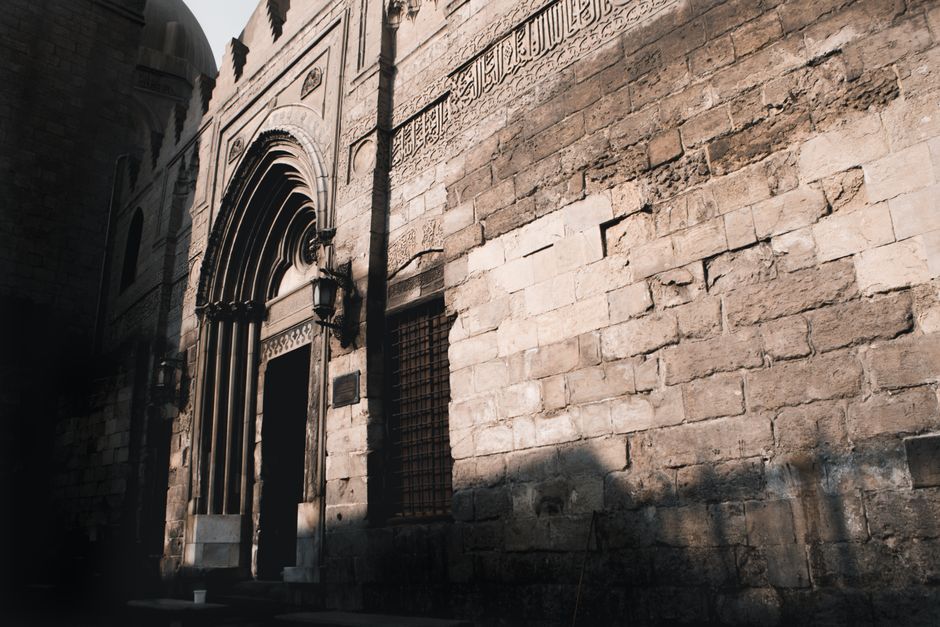
Next, photograph the entrance from across the street. Include the whole doorway and enough of the neighbouring frontage to make the building recognizable. A close-up of a door number may be technically accurate while remaining useless from the opposite pavement.
Then identify the nearest obvious landmark. Choose something visible and easy to communicate, such as a prominent mosque, square, hotel, or major shop. Save its name in Arabic if it appears on the map, along with the version you can read aloud.
These three records answer different questions:
- Where is the building on a map?
- What does the entrance look like?
- What nearby place can another person recognize?
One answer may fail. Three give you options.
If this feels overly cautious, consider the Cyrillic address Mila hadn’t saved. Addresses become fragile when they depend on an alphabet, connection, or pronunciation you have not mastered yet.
Choose the first errand by consequence
Once the route home is secured, look at the three urgent tasks. Do not rank them by which feels easiest or closest. Rank them by what happens if you delay.
An immigration or residence permit task may depend on a fixed appointment. A phone or connectivity task may make every later journey easier. Groceries may feel immediate, but they are often more flexible than an official booking or a time-sensitive check-in requirement.
Use three quick checks:
- Does this task have a fixed time?
- Will completing it unlock the other two?
- Can it safely wait until later today?
This turns a noisy list into a sequence. Fixed commitments come first. Enabling tasks usually come next. Flexible errands fill the gaps.
The same logic helps when an entire arrival list starts shouting at once. The Vancouver arrival-task guide shows how to reduce that pressure by protecting the essentials before chasing completion.
Earn the walk through Khan el-Khalili
Khan el-Khalili works well as the morning’s reward because it gives the day a clear finish line. First secure the address. Then complete the task with the highest consequence. After that, take the walk.
The reward should stay simple: notice an entrance you would have missed, follow the market lanes, stop for tea if you feel like it, and let Cairo become a place you are beginning to recognize rather than a list of obligations.
This is where Aqee’s guided, gamified approach fits the reality of moving abroad. Progress feels easier when a large relocation is divided into small missions with visible payoffs. Save the location. Protect the deadline. Complete the next useful task. Then explore.
The fun does not need to wait until every document, bill, and permit is settled. It needs a small boundary around it so that you can enjoy the city without wondering whether you will find your way back.
Make the saved address usable by someone else
Before you leave the building, test your three-part address record as if someone else had to use it.
Can you open the pin without searching again? Does the entrance photo show enough context? Is the landmark name saved in a form a driver, neighbour, or shopkeeper could recognize?
NASA’s Mars Climate Orbiter reached Mars, but the navigation data did not mean the same thing across the systems using it. Your Cairo address should survive that same handoff on a human scale, from Arabic to your preferred language, from a map to the street, and from your phone screen to another person.
Save the pin. Take the entrance photo. Record the landmark. Then put the phone in your pocket and begin the first errand.