Three small, low-risk wins can make Hong Kong feel manageable on Day 0: complete one metro trip, order one meal, and finish one neighbourhood errand. Each completed task replaces uncertainty with practical knowledge you can use tomorrow.
In April 1970, Apollo 13 was losing oxygen far from Earth. Jim Lovell, Jack Swigert, and Fred Haise faced a damaged spacecraft, limited power, rising carbon dioxide, and a route home that had to be worked out one decision at a time.
NASA’s Apollo 13 mission report documents the decisions and improvised procedures that followed. The crew moved into the lunar module, conserved electricity and water, adapted carbon dioxide scrubbers, and prepared for re-entry. No single action brought them home. Each one kept the next option open.
Moving to Hong Kong carries nothing like those stakes. The useful parallel is the sequence. When the whole situation feels too large to solve, complete the next clear task and use what it teaches you.
Tap one: make one metro trip
Picture your first morning with three goals written on your phone. You do not need to understand Hong Kong today. You need to reach one station, exit through one gate, and recognise the route back.
At the MTR entrance, other passengers move with the confidence of people repeating a familiar routine. You pause to check the signs, confirm your direction, and tap through. That hesitation is normal. Every local habit begins as a conscious decision.
The first trip teaches more than the map. You learn where to stand without blocking the gate, how much time to leave for finding the right exit, and which station signs deserve your full attention. You also discover that taking a wrong turn inside a large station is an inconvenience, not a failed relocation.
Before leaving, save the station name and photograph the exit information for your return. Check current fares and payment options through official local sources, since those details can change.
One completed trip turns “Can I get around Hong Kong?” into “I know how to repeat this route.”
Tap two: order breakfast in Sham Shui Po
The second win should meet an immediate need. Food works well.
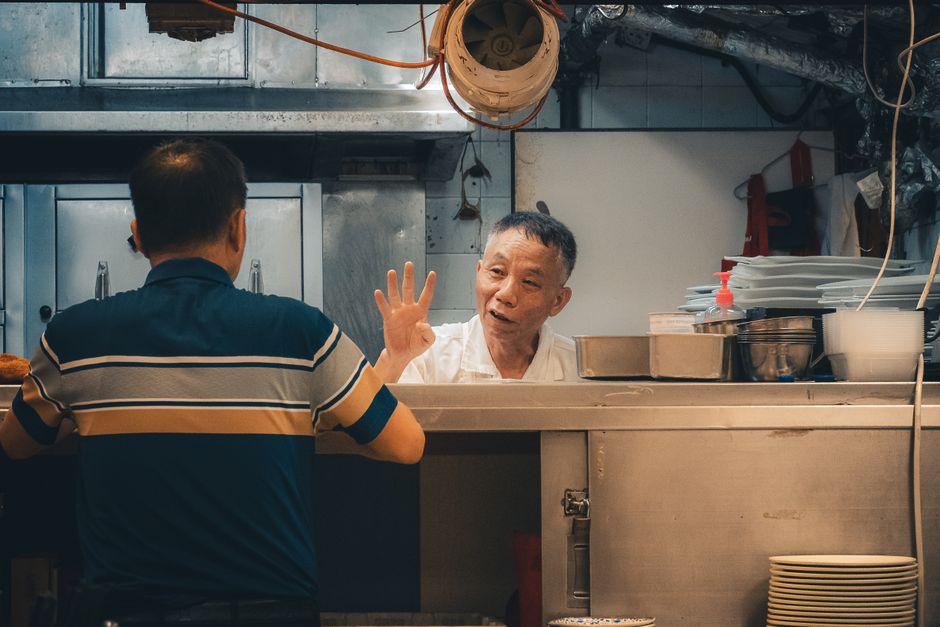
Choose a busy breakfast counter in Sham Shui Po where you can see what people are eating or point to a menu item. You may need an extra moment to understand the choices. The person serving you may need an extra moment to understand yours. Keep the order simple, confirm the amount before paying, and have a backup payment method available.
The goal is not to perform like a local. It is to eat breakfast and learn one place where you can return without researching every detail again.
Notice the useful information around the meal. Which dishes look manageable before a long admin appointment? How does ordering work at the counter? Do you pay before or after eating? Treat observations as clues rather than universal rules, because another café may do things differently.
Save the location and one item you would order again. That tiny record gives tomorrow morning a starting point.
A first meal also creates a softer kind of progress. Your new city now contains one known door, one familiar counter, and one choice you can make without opening five browser tabs.
Tap three: finish one neighbourhood errand
For the third win, pick an errand with a clear finish line. Buy a basic household item. Find somewhere to print a document. Locate a nearby pharmacy and check what it stocks. Confirm where you can top up or manage the payment method you plan to use.
Keep immigration, registration, and residence permit tasks on a separate verified checklist. Rules, required documents, and office arrangements can change, so confirm them through official sources rather than relying on an old forum post. If the admin pile feels tangled, the Day 0 three-envelope plan offers a practical way to separate urgent tasks from later ones.
A neighbourhood errand teaches you how ordinary life works within walking distance of home. You begin recognising useful signs, entrances, payment habits, and the route back to your building. The city shifts from a collection of unknowns into a small working map.
Write down the result when you finish: what you bought or confirmed, what payment worked, and anything worth bringing next time. Memory gets crowded during a move. A short note prevents you from solving the same problem twice.
Build tomorrow from what worked today
Apollo 13 returned safely because NASA and the crew kept narrowing a dangerous problem into actions they could complete with the resources available. The lesson for Day 0 is simpler: momentum comes from closing one loop, then another.
Set tomorrow’s three taps before you go to bed. Choose one admin task, one daily-life task, and one small pleasure. That might mean checking a document requirement, testing the route to an appointment, and returning to Sham Shui Po for the breakfast you can now order with less hesitation.
Do not grade the day by how settled you feel. Grade it by what became repeatable. Save the station exit. Pin the breakfast counter. Record the completed errand. By tomorrow morning, Hong Kong will contain three fewer unknowns.