
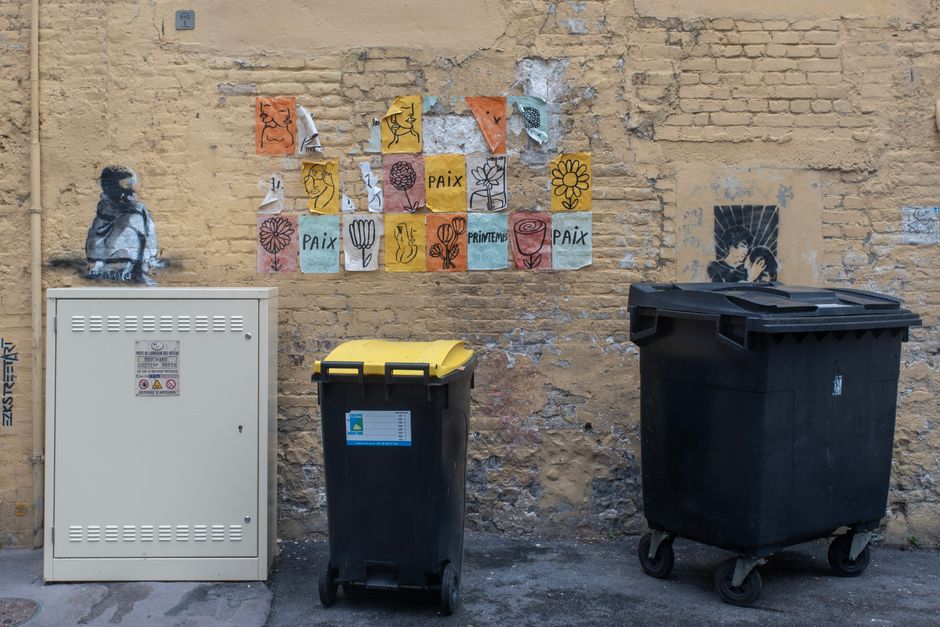
Missing rubbish day abroad can feel like proof that everyone else received a local instruction manual you never got. Solving that one small problem restores confidence because it gives you immediate evidence that you can read your new city and act on what you learn.
In April 1970, Apollo 13 astronauts Jim Lovell, Jack Swigert, and Fred Haise faced rising carbon dioxide inside the spacecraft. The lunar module had round openings for its filters, while the command module carried square cartridges. The equipment did not fit, and the crew’s route home was still uncertain.
At Mission Control in Houston, engineers worked out how to connect the incompatible parts using materials already aboard. They passed the instructions to the crew, who assembled the improvised adapter. NASA’s Apollo 13 mission history documents the problem and the fix, one of several practical decisions that helped the astronauts return safely to Earth.
A missed bin collection carries no comparable danger. The shape of the problem, however, is familiar: a basic system is operating around you, the required pieces do not appear to fit, and progress depends on one clear instruction you can use now.
The bag left behind feels personal
You put your rubbish out with reasonable confidence. The next morning, neighbouring bags or bins are gone. Yours remains.
Perhaps the bag type was wrong. Perhaps collection happens on another day for your side of the street. Food scraps may need separating, or the building may have a collection point you have not found. Local rules vary, sometimes from one municipality to the next, so guessing from habits learned elsewhere can make matters worse.
The practical inconvenience is small. The emotional weight arrives from everything surrounding it.
You may already be carrying questions about your residence permit, your lease, your bank account, and a document with an expiry date you keep checking. You still pause at supermarket shelves to work out what you are buying. You have not yet learned which neighbour welcomes questions and which door in the building leads somewhere private.
Then the rubbish comes back inside.
That bag can feel like a verdict: you do not know how things work here.
It is not a verdict. It is one missing piece of local knowledge.
A small answer beats a complete relocation manual
When you feel lost, the tempting response is to search for the definitive guide to living in your new country. Soon you have twelve tabs open, three conflicting checklists, and advice written for a different city or an older set of rules.
None of that tells you what to do with the bag beside your door tonight.
A useful next step is smaller. Check the notice in your building. Look at the municipality’s current guidance. Ask a neighbour, caretaker, landlord, or local group one precise question: “Which container should this go in, and when should I put it out?”
Then complete the task.
Psychologists call this kind of progress a “small win.” In their 1984 paper in American Psychologist, Karl Weick and his co-authors described small wins as concrete, manageable outcomes that can build momentum around larger problems. The idea fits relocation especially well because moving abroad gives you many problems that cannot be solved in one sitting.
One correct rubbish drop will not renew a residence permit. It does something useful sooner: it turns the city from an unreadable system into one you have begun to understand.
Build confidence in the order life presents it
Large relocation guides organise life into categories. Real life arrives as interruptions.
The rubbish was not collected. A delivery needs an address detail you have never used. The washing machine has unfamiliar symbols. Someone mentions a local holiday that changes the week’s routine. Each moment offers a tiny lesson in how the place works.
Treat the lesson as a short track:
- Identify the exact problem in front of you.
- Find the most local, current source available.
- Complete the smallest action that produces a visible result.
- Save what you learned in plain language for next time.
This approach also works for higher-stakes admin, with more care. Break the task into the next verifiable action, note the source, and keep expiry dates visible. The Day 0 relocation plan uses the same principle: separate urgent work into clear tracks so every worry does not compete for attention at once.
The distinction matters. Local rubbish guidance can often be checked and acted on quickly. Visa, tax, and registration questions may require official information or qualified advice. Small steps reduce overwhelm; they do not replace proper verification.
Let the next collection become your proof
By the following collection, you know which bag, which place, and which local source to check if the schedule changes. The rubbish disappears with everyone else’s. Nobody applauds. That is part of the pleasure.
The result is ordinary, visible, and yours.
Apollo 13’s improvised adapter did not solve every problem facing Lovell, Swigert, Haise, and the teams in Houston. It solved the dangerous problem immediately in front of them and helped preserve the possibility of getting home.
Your first weeks abroad work better the same way. Find the next mismatch. Get one reliable instruction. Make the pieces fit. Tonight, start with the bag beside the door.