
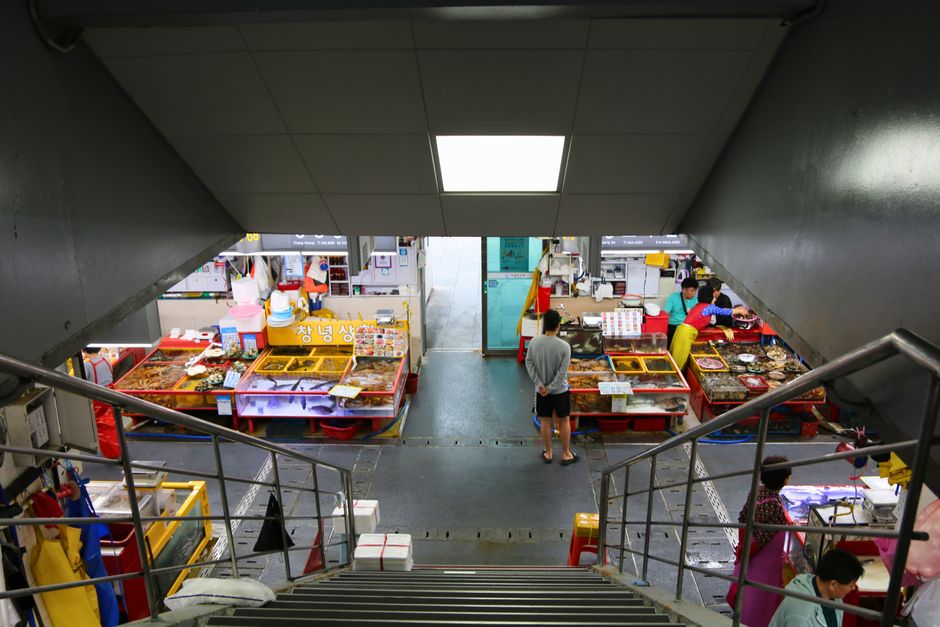
Your first Monday in Busan should pair one essential immigration-status check with an unhurried walk through Jagalchi Market. Confirm the next requirement tied to your visa or residence status first, then let the seafood lanes give your new city a smell, a sound, and a memory.
In April 1970, Apollo 13’s oxygen tank exploded while Jim Lovell, Fred Haise, and Jack Swigert were travelling toward the Moon. The crew moved into the lunar module, but carbon dioxide began building as its filters reached their limits. NASA’s account describes the problem plainly: the command module used square filter cartridges, while the lunar module needed round ones.
Engineers in Houston had to make the available parts fit. The improvised adapter helped control the immediate danger and gave the crew a route forward, although their safe return was still far from certain.
Your first day abroad carries much smaller stakes, thankfully. The useful principle is the same: identify the condition that could quietly narrow your options, deal with it first, and then spend your remaining attention on something that makes the day worth remembering.
Start with the status that controls your next step
Before opening a dozen relocation checklists, look at the document or entry record that currently supports your stay. Confirm what status you entered under, what date appears on it, and what your next required action seems to be.
You are looking for one clear answer: what must happen next to keep your immigration status on track?
That may involve a residence permit, local registration, a university process, an employer document, or another step connected to your circumstances. Rules differ by nationality, purpose of stay, and current status, so use the official information that applies to you. If the wording is unclear, save the relevant official page and note the question you need to ask.
Do not try to solve the entire immigration system before lunch. Capture three practical details:
- The status or permission you currently hold.
- The next action linked to it.
- The official source you will check again before acting.
Take a clear photo or scan of the relevant document and store it somewhere secure. Add any known expiry date to your calendar with an earlier reminder, leaving yourself time to verify what renewal requires. If you cannot confirm a deadline from an official source, mark it as “verify” instead of guessing.
This small check prevents a common Day 0 mistake: spending hours arranging phone plans, furniture, and food while the document controlling everything else remains buried in a suitcase.
Give the first day a second kind of progress
Once that check is recorded, close the tabs.
Head toward Jagalchi Market and walk through the seafood lanes without turning the outing into another assignment. Notice which stalls make you slow down. Listen for the rhythm of orders and conversations. Pick one thing to eat if you feel comfortable, or simply trace a route you would recognize on a second visit.
This walk has a practical purpose. A new city becomes easier to navigate when it contains a place you can picture. Jagalchi gives Busan texture beyond maps, forms, and temporary accommodation.
You may also collect a few low-pressure clues for later. Which entrance did you use? Where could you meet someone without needing a perfect address? What nearby landmark would help you orient yourself? These observations create familiarity without demanding that you “settle in” within a single afternoon.
The market visit also puts a clean edge around the admin task. You checked the essential issue, recorded the next move, and stopped. That boundary matters when every relocation task feels urgent.
Keep the two wins deliberately small
Day 0 can become a contest against an endless list: permit, bank account, housing, transport, healthcare, phone service, university paperwork, work documents, groceries, and sleep. Treating every item as equally urgent makes it harder to recognize the one that could constrain the rest.
A better rhythm is one protective win and one belonging win.
The protective win keeps your options open. Today, that means confirming your immigration status and identifying the next official step. The belonging win gives you a reason to feel present in Busan. Today, that means seeing Jagalchi Market with your own eyes.
This is close to the logic behind a Day 0 relocation plan built around clear tracks: separate genuinely urgent work from tasks that can wait, then preserve some energy for the life you moved to have.
It also helps with motivation. Completing a bounded task creates visible progress. Following it with exploration gives that progress an immediate reward, without inventing a fake deadline or forcing yourself through five more forms.
End Monday with evidence, not exhaustion
Before bed, write down what you confirmed about your status, where the official information came from, and the next action you need to take. Then save one detail from Jagalchi: a photo, a food you want to try, or a landmark you can find again.
NASA’s engineers could not solve every Apollo 13 problem at once. They worked the constraint in front of them, using what was available, while the crew’s route home remained uncertain. Your first Monday follows the gentler version of that pattern: protect the route ahead, then reclaim enough attention to experience where you are.
Tomorrow’s list will still exist. Tonight, you have one verified immigration note and one real memory of Busan. That is enough progress for Day 0.