
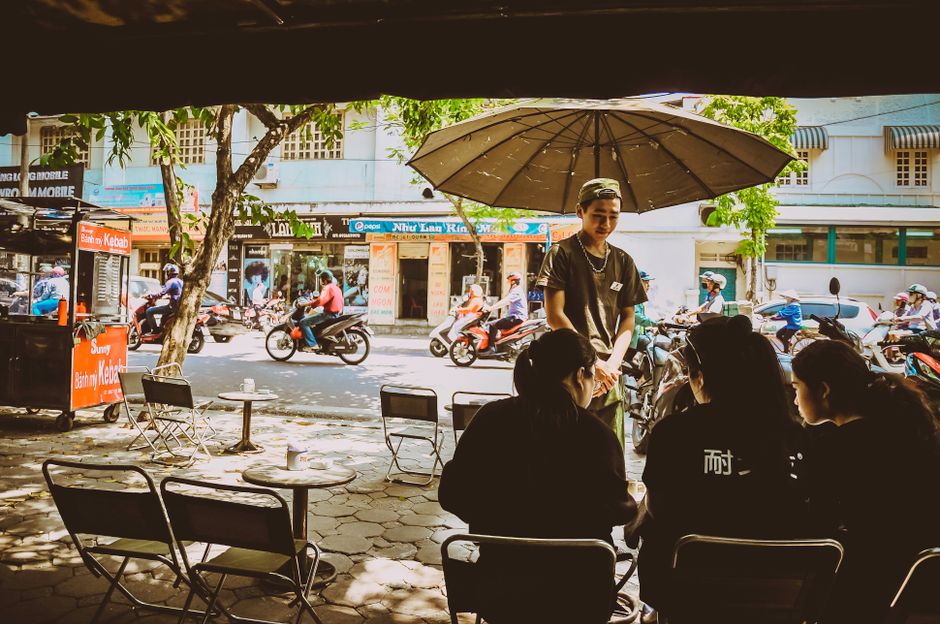
Your first month in Hanoi will feel less isolating if you build a small weekly rhythm around repeated places, shared activities, and two or three people you can contact without planning a major outing. Handle visa and residence tasks promptly, but give community-building the same place on your arrival checklist.
In 1890, writer Lafcadio Hearn arrived in Japan for a teaching post in Matsue. He could not know that this temporary move would reshape the rest of his life. He learned from local people, married Setsuko Koizumi, became a Japanese citizen in 1896, and spent years interpreting Japanese life for readers abroad. His path is documented by Encyclopaedia Britannica and in his published writings.
Hearn’s circumstances were far removed from a digital nomad’s first month in Hanoi. The useful connection is simpler: a new country starts becoming a life through attention, routine, and relationships with people who know the place from within.
Build a week you can repeat
Hanoi can fill your days before it fills your contact list. You may work from a café near West Lake, walk through the Old Quarter, eat somewhere excellent, and still return home without having spoken to anyone beyond a server or cashier.
Create repetition on purpose. Choose one place for focused work and visit at roughly the same time several days each week. Join one recurring activity, such as a language exchange, running group, climbing session, dance class, volunteer project, or coworking event. Pick something you would attend even if you made no close friends on the first night.
Repeated contact matters because friendship rarely arrives through one impressive evening. It grows when someone recognizes you, saves you a seat, or asks whether you are coming back next week.
Keep the radius small at first. If you are staying in Tây Hồ, Trúc Bạch, Ba Đình, or near Hoàn Kiếm, begin with activities you can reach without turning every meetup into a cross-city expedition. Hanoi traffic can make a casual plan feel larger than it looked on the map. A nearby routine is easier to maintain when work runs late or rain changes the evening.
Turn introductions into actual plans
Digital nomad groups can produce a phone full of new contacts and an empty Saturday. The missing step is usually a specific invitation.
After meeting someone you enjoy talking with, suggest one simple follow-up: coffee near your work spot, lunch after a language exchange, or a walk around the lake. Give it a day and a general time. “We should hang out” asks the other person to build the plan; “Coffee near Trúc Bạch on Thursday afternoon?” gives them something they can answer.
Aim for a mixed circle. Other newcomers understand the odd loneliness of starting over, while Vietnamese friends and longer-term residents can help you read situations you might otherwise misinterpret. They may explain everyday etiquette, suggest a dish you have overlooked, or tell you which local habit is worth adopting.
Approach those relationships with curiosity rather than treating people as a help desk. Learn a few Vietnamese phrases. Ask about someone’s work, neighborhood, or favorite ordinary lunch. Share something useful in return. Community lasts when the exchange runs both ways.
For a gentler reminder that small social choices can change an arrival, read The Birthday Card Maya Almost Took Home, and the Connection She Nearly Missed.
Protect social time from admin and remote work
Visa paperwork, accommodation questions, banking, connectivity, and document renewals can make every unfinished task feel urgent. Remote work adds another trap: your colleagues may be awake when Hanoi is winding down, so the evening disappears into calls.
Separate the two kinds of work. Keep an admin list with the next concrete action for each item, then choose designated times to handle it. Store document copies securely, note expiry dates, and confirm current requirements through official sources. Avoid letting a vague sense of bureaucracy consume the hours you set aside for meeting people.
Put social plans on your calendar before work expands into them. One recurring weekday activity and one flexible weekend invitation are enough to create momentum. Leave room for rest, too. Accepting every event during your first week can turn exploration into another obligation.
If you spend most days alone behind a laptop, use your environment to lower the effort required to interact. Work occasionally from a shared space. Eat at the same small group of places. Return to a market stall or café where recognition can develop naturally. Familiarity is a modest goal, but it gives a new city edges you can hold onto.
Make your first month measurable
Do not judge the month by whether you have already found your closest friends. Track actions you control.
By the end of each week, check whether you returned to a familiar place, attended a recurring activity, followed up with someone, and protected one block of time from work. If one approach feels flat after several attempts, change the activity while keeping the rhythm.
Hearn’s life in Japan did not emerge from completing arrival paperwork. It developed through years of learning, relationships, and close attention to the place around him. Your first month in Hanoi only needs to begin that process.
Before tonight, choose one recurring event and send one specific invitation. Those two small commitments give next week a shape, and they give Hanoi a chance to become more than the city outside your window.