The night before you move to Bangkok, you will not sleep well. Not because of excitement, though there is some of that. You will lie awake because your brain keeps running the same loop: did I print the right documents, will I find the taxi, where am I actually sleeping tomorrow, and how much money is left after the flights and the deposit. Four separate worries, each one loud enough to keep you up.
Here is the fix: turn that list into four small wins you can finish before bed. Not a plan for the whole move. Just four checkboxes, each one simple enough to tick in under half an hour. When you close the laptop, you will have done something, and that something is what lets you sleep.
The four-win plan, explained
Marco, a product designer moving his life from Milan to a two-room flat near On Nut, discovered this the hard way. At 11pm on his last night in Italy, he was photocopying his passport for the third time because he kept losing the copies in piles of laundry. His visa documents were scattered across three folders, and he had no idea which ones the officer would actually ask for.
The plan is simple. Win one: your visa document check. Win two: your first-week budget. Win three: your airport route. Win four: your temporary address confirmation. Finish all four, and the move stops being an abstract fear and becomes a list of things already handled.
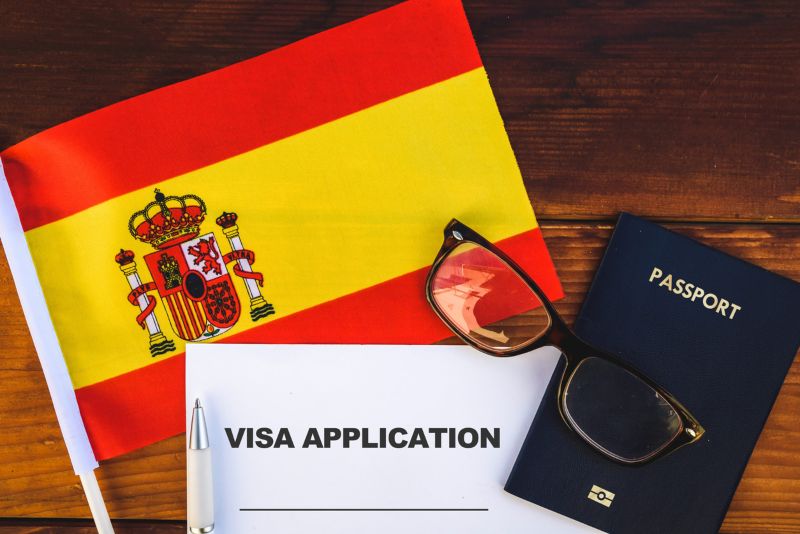
Win one: the document check
Open a single folder on your desk, or a single note on your phone, and put every document in one place. Passport, visa approval, proof of funds, accommodation booking, passport photos, printed copies of everything. If you think you might need it, it goes in the folder. You can sort it later; tonight you only need it gathered.
The goal is not perfection. The goal is that when the officer asks for something, you do not have to dig through a bag with shaking hands. Marco’s version of this took him 22 minutes. He found a birth certificate he forgot he had and an old visa photo he would have needed to retake in a panic at a photo booth near the airport.
Win two: the first-week budget
Skip the grand yearly spreadsheet. You need to know one number: how much cash you need to survive until you can open a bank account and get paid. Rent deposit, first month’s rent, groceries, transport, a phone SIM, and a buffer for the surprise charges that always appear.
The surprise charges are the part nobody warns you about. A late fee on a utility you did not know existed. A deposit on a rental bike. A “furnished” flat that turns out to lack a kettle, a pillow, and a single hanger. Budget for the kettle. Future-you at 7am in a jetlagged fog will be grateful.
Win three: the airport route
Google Maps is a wonderful thing, but standing in a hot arrivals hall with two suitcases and a dead phone is not the moment to learn how the skytrain connects to the metro. Look up your route now. Write it down on paper. Put the paper in your passport or your wallet, somewhere you cannot lose it.
The route does not need to be perfect. It needs to exist. A printed backup of the route, plus the address of your accommodation written in the local language, is worth more than any app on your phone.
The dead phone rule
Your phone will die at the worst moment. It is a law of moving abroad, right up there with losing your favorite sock and the jetlag hitting on day three. The printed route and written address are your insurance against that law. For more on this, our post on the traveler’s dead phone in a new city covers exactly what it costs you.
Win four: the temporary address
Confirm where you are sleeping on your first night. Not the neighborhood, the actual building. Message your host or your hotel and get the exact address, the check-in time, and what to do if you arrive late. Save it offline. Write it down. This is the win that turns “I am moving to Bangkok” from a terrifying abstraction into “I am staying at this specific place tomorrow night.”
Marco’s version of this was a confirmation email he nearly missed. His host had a family emergency and needed to hand him the keys through a neighbor. If he had not checked his inbox that evening, he would have arrived to a locked door and a silent phone. The neighbor’s number was in that email. One win saved him the worst first night a mover can have.
What the four wins actually buy you
Marco landed at the airport, took the train to his stop, walked to his building, and let himself in. It took him three attempts to match the key to the lock, because he was tired and the corridor was dim. But he got in. He put his bag down, drank water from the tap, and was asleep before his head hit the pillow.
Nothing about the move was easy after that. He still queued for registration, still paid deposits he did not expect, still had one afternoon where he sat in a park and wondered why he had left the apartment he already understood. But that first night, he slept. And that first night is the one that sets the tone for everything after.
The four wins are not about being prepared. They are about being able to close your eyes. Four small checkboxes, finished before bed, so the last thing you do in your old life is not panic. It is rest.