
Fukuoka Airport late-arrival transport depends on your arrival terminal, the current public transport timetable, and how much delay you can absorb after landing. Before you fly, check the terminal, confirm the date-specific route, choose a primary option, and write down a taxi or accommodation fallback in case the last practical connection disappears.
At 11:18 p.m., Hana stood beside a charging outlet at Fukuoka Airport with one phone at 12 percent, a paper showing her first accommodation address, and a train journey she had planned from memory. Her flight had arrived late. The airport signs were clear enough to show where she was, but the question had changed from “How do I get into Fukuoka?” to “What can I still reach tonight?”
The answer was not obvious from a generic airport guide. A route that works for an afternoon arrival may be a poor plan after a delay. A transfer between airport areas may take attention and time. A timetable that looks suitable in a search result may not match the date, terminal, or service you actually use. If Hana missed the last practical connection, she could end up paying for an expensive unplanned ride, struggling to explain her accommodation address, or trying to solve everything while her phone battery fell toward zero.
She opened her relocation checklist and found the detail she had almost skipped: her arrival terminal, the official transport pages, the accommodation’s late-arrival instructions, and a taxi fallback. That small preparation gave her a sequence. First confirm where she was. Then check what was still operating. Then choose the safest available next step.
Start with the arrival terminal
Begin your planning with the terminal shown on your booking and confirm it again close to departure. Fukuoka Airport provides separate access information for its airport facilities, and the practical route from your landing point may depend on where you need to go before reaching your onward transport.
This matters most when your plan involves moving between airport areas. A late arrival leaves less room for wandering, asking several people the same question, or discovering that the transport point you expected is elsewhere. Treat the terminal as the first item in your arrival sequence, not as background information.
Write down three things before you travel:
- The terminal where your flight is expected to arrive.
- The terminal or airport area connected to your chosen transport.
- The exact point where you expect to board, collect a taxi, or ask for assistance.
Use the official Fukuoka Airport subway access information and bus access information to understand the published options. Keep the pages available offline if your phone allows it, or save the relevant details in your relocation checklist. Airport Wi-Fi and mobile data can be useful, but your late-arrival plan should not depend on a perfect connection immediately after landing.
The same preparation helps if you have checked luggage, mobility needs, children with you, or several bags. A short transfer can feel very different when you are carrying everything you own for the next month. If you need step-free access, additional time, or help locating a transport point, check the airport’s accessibility and taxi guidance before travel. You can also prepare a short message showing your accommodation name and address so you do not have to search through multiple apps at the curb.
Hana had packed her accommodation address into a note, but she had not written down the terminal. She had assumed the airport would feel small enough to solve on arrival. At 11:24 p.m., with her suitcase beside her and a nearly empty phone, that assumption became a problem she could have avoided.
Check the date-specific public transport route
Public transport should be checked against the date and expected arrival conditions, not copied from a general itinerary. Start with the official Fukuoka City Subway route information, including its published route map and operating-hours information, then compare that information with the airport’s own access pages.
Look for the complete chain from landing to accommodation:
- Where you leave the arrival area.
- How you reach the relevant transport point.
- Which service you plan to take.
- Where you need to change, if a transfer is involved.
- How you will cover the final part of the journey after leaving public transport.
The last step is easy to overlook. Reaching a central station does not automatically mean reaching your accommodation. You may still need to walk with luggage, find a taxi, or locate a building whose entrance is not on the street you first expect. A plan that ends at a station is incomplete if your arrival is late and your energy is low.
Check the official information again when your travel date is close. Look for service notices, route changes, disruptions, and operating information that could affect your planned journey. Do not treat a route planner, an old blog post, or a screenshot from another traveller as the final authority. Those sources can help you understand the shape of a journey, but the operator’s current information should decide whether your plan remains workable.
This is also where you should define the phrase “last connection” carefully. The final published service may not be the final practical service for you. If your plane lands close to the end of operating hours, you still need time to leave the aircraft, pass through the airport, collect baggage, find the transport point, and handle any delay. A timetable gives you a service window. It does not promise that you will reach that service in time.
Build a buffer around the parts you cannot control. The aircraft may reach the gate later than planned. A checked bag may take longer. You may need to ask where to go. Immigration or arrival procedures may take more time than expected. Your first accommodation may have a check-in condition you have not yet confirmed.
Write your primary route in a simple format:
“After landing at [terminal], I will check the current official route information. If the service remains practical, I will travel to [planned destination] and complete the final leg by [walking or taxi]. If the timing no longer works, I will use [fallback].”
That sentence is more useful than memorising a route name. It gives you a decision point.
Hana’s original plan had one route and no decision point. Her revised plan had two checks: the current transport information and the time remaining after baggage collection. When the timing no longer supported her first option, she did not have to invent a new journey while standing under fluorescent lights. She already knew what question to answer next.
For a broader example of this arrival logic, see Airport arrival to first accommodation: How breaking the Metro ride into tasks builds relocation confidence. The useful lesson is simple: treat arrival as a sequence of small tasks rather than one large trip.
Build a realistic taxi and accommodation fallback
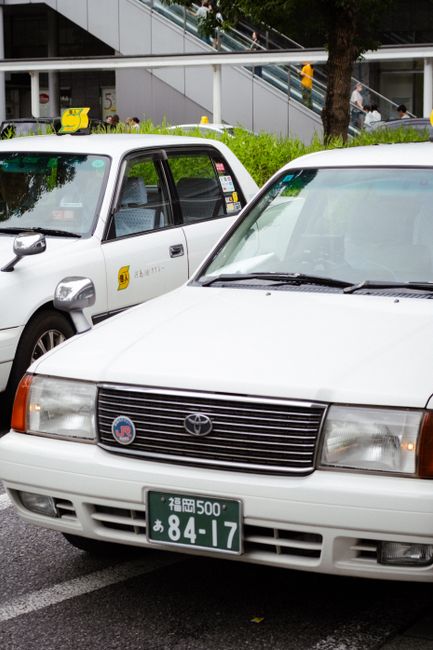
A taxi fallback should be a real option you have prepared, not the vague instruction “take a taxi if needed.” Before flying, identify where you would go to find official taxi guidance at the airport, how you will show your destination, and how you will handle payment or communication if your preferred method fails.
Use the airport’s published taxi information for the current guidance. Do not assume that a taxi will solve every problem instantly. You may need to wait. Your phone may have limited battery. Your accommodation may have a late check-in procedure. You may need to confirm the destination clearly before leaving the airport.
Prepare the following:
- The accommodation name and full address in a note that can be shown to a driver.
- A second copy of the address saved offline or written down.
- The accommodation’s late-arrival instructions.
- A contact method for the property, if one is provided.
- A spending limit or payment plan that fits your situation.
- A backup place to wait safely if check-in becomes impossible.
If your accommodation has a reception desk, ask in advance what happens when a guest arrives late. The answer may involve a key box, a separate entrance, a message, or a procedure you must complete before arrival. Do not infer the process from the property’s daytime check-in description.
If the property cannot accept you late, identify the next safe decision before you depart. That may mean choosing a different accommodation for the first night, contacting the property before boarding, or deciding how you will remain at the airport while arranging the next step. The right answer depends on your booking and circumstances, so record the actual instruction you receive.
Be precise about the role of a taxi in your plan. It can reduce the number of transfers after a long flight, but it can also introduce uncertainty around cost, availability, communication, or the final destination. It is usually easier to make a taxi decision when you have already prepared the address and checked the official airport guidance.
Your fallback should answer four questions:
- Where will I go?
- How will I get there?
- How will I show the destination?
- What will I do if the first accommodation cannot receive me?
Hana had thought her fallback was “use a taxi.” She had not saved the accommodation address outside her travel app, and she had not checked whether late arrival instructions existed. Her turn came when the public transport timing stopped making sense. She opened the airport’s taxi guidance, showed the address from her offline note, and sent one short message to the property before leaving the airport.
The landing was ordinary, which was exactly what she needed. She reached the accommodation with her suitcase, a working plan for the morning, and enough battery left to set an alarm. Her first night in Fukuoka did not become a test of improvisation.
Plan for delay and accessibility needs
A late-arrival plan should include the arrival conditions that make a route harder to use. Delay is one possibility. So are heavy luggage, fatigue, limited mobility, language difficulty, a child who needs attention, or a phone that is nearly out of power.
Check the airport’s accessibility information before travel if you need step-free movement, accessible facilities, assistance, or additional time. Save the relevant guidance with your travel documents. If you use mobility equipment or require support, contact the relevant airline or airport channel before the journey and confirm what assistance has been arranged. Keep the confirmation accessible during travel.
Build your plan around the version of the journey you can manage after a long flight. A route with several changes may be possible in theory but unsuitable if you are tired, carrying large bags, or arriving after services have become less frequent. The most efficient route on a map may not be the most workable route from the airport door to your accommodation.
Use a simple arrival status check:
- Is my phone charged enough to navigate or call?
- Do I have the accommodation address offline?
- Is my primary public transport option still practical after the actual delay?
- Can I reach the transport point without assistance?
- Do I know where to go if I need a taxi?
- Can my accommodation receive me when I arrive?
If the answer to one of these questions is no, adjust the plan before you leave the airport.
Avoid making promises to yourself such as “I will definitely catch the last train” or “a taxi will always be available.” The official sources can tell you about published access, route, operating, and taxi information. They cannot remove the uncertainty created by a late aircraft, a long baggage wait, or an unexpected change. Your preparation should make those uncertainties manageable.
This is the practical value of a local-settlement checklist. It keeps the details that are easy to forget when you are booking flights: the terminal, the current route, the accommodation instructions, the fallback, the support you may need, and the next morning’s first task. Aqee is designed to turn an international move into a guided sequence from arrival through settling in, so create an Aqee local-settlement checklist before your trip and put the late-arrival decisions in it.
What to do next
Open the official Fukuoka Airport subway, bus, and accessibility pages, along with the Fukuoka City Subway route and operating-hours information. Confirm your arrival terminal. Check the transport information for your travel date. Write one primary route and one realistic fallback. Then send your accommodation a late-arrival message if the booking instructions leave any uncertainty.
Keep the plan short enough to use when you are tired:
“Terminal confirmed. Current route checked. Primary option recorded. Taxi guidance saved. Accommodation address available offline. Late arrival instructions confirmed.”
Hana’s useful preparation was not a perfect prediction of the night. It was a decision sequence she could still follow when the flight arrived late and her phone battery was low. That is the standard to use for your own plan. It should work on the evening you actually land, with your actual terminal, your actual luggage, and the transport information published for that date.
Sources
- Fukuoka Airport, subway access, checked 2026-09-24.
- Fukuoka Airport, bus access, checked 2026-09-24.
- Fukuoka City Subway, route map and operating hours, checked 2026-09-24.
- Fukuoka Airport, accessibility and taxi guidance, checked 2026-09-24.
Related Aqee guide
Keep the practical follow-up in your wider move plan with Aqee’s immigration-paperwork guide.