
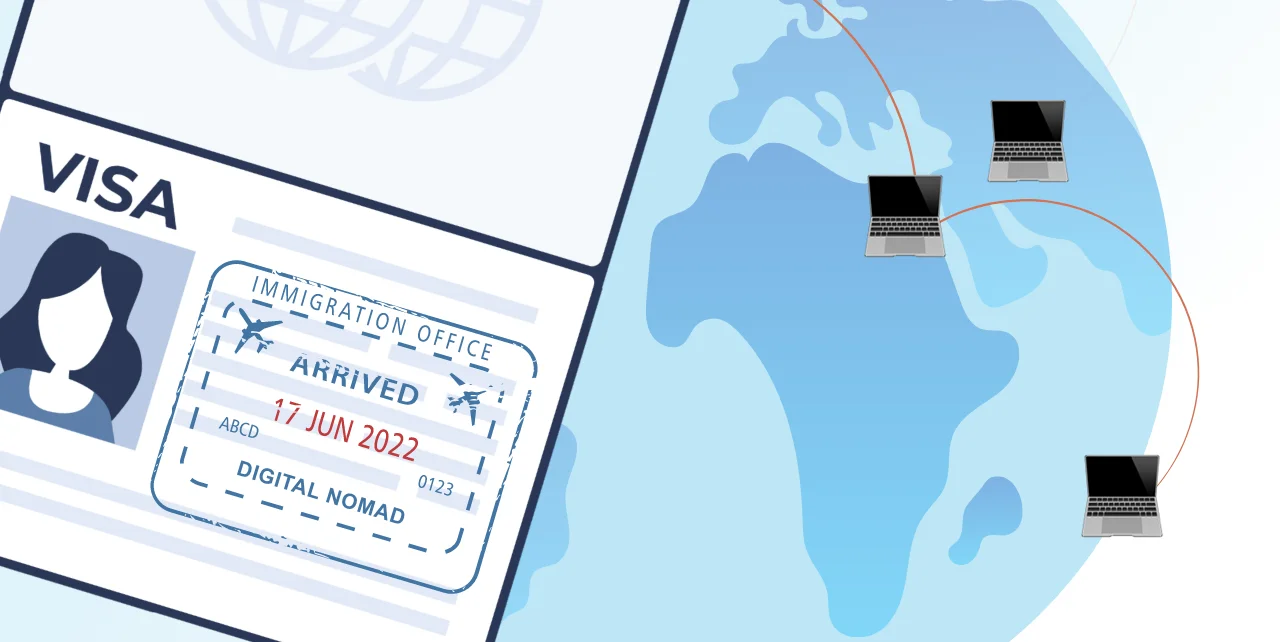
A remote work visa plan starts with your actual work arrangement: who pays you, where that organisation is based, what work you will perform, and how long you expect to stay. Then you test that arrangement against a route published by the destination authority, because a remote job, a flight booking, or a generic checklist does not create immigration permission.
At 8:40 on a Tuesday morning in Lisbon, Noor was holding a coffee, a half-charged phone, and an email from her employer that began with, “Can you confirm where you will be working from?” Her manager was in Toronto. Her client was in Berlin. Her contract had been signed through a company registered elsewhere. She had already saved three articles about digital nomad visas, booked a furnished room for the following month, and told a friend she was moving.
Then she noticed the problem. None of those articles answered the first question clearly: which relationship would the destination authority assess?
The wrong answer could leave Noor with a non-refundable housing commitment, an application that did not match her evidence, or permission that covered residence but not the work she planned to perform. Her move was still possible, but the booking and the announcement had come before the route had been tested. If the authority rejected the application, she could lose the room and have to explain to her employer why her planned work location had changed.
That is the point of a source-led remote work visa plan. Begin with the work arrangement. Build outward from there.
Describe the actual work arrangement
Before searching for a visa name, write a plain-language description of your work. Keep it factual enough that another person could understand the relationship without guessing.
Start with these questions:
- Who is your employer or client?
- Where is that employer or client established?
- Are you an employee, contractor, freelancer, business owner, or a mixture?
- Who pays you?
- Where will the work be physically performed?
- Will you work only for organisations outside the destination country?
- Will you seek local clients, local employment, or local business activity?
- How long do you expect to stay?
- Will anyone depend on your residence application?
Avoid compressing several relationships into one phrase such as “I work remotely.” That sentence describes a method of working, not the legal or immigration relationship behind it.
A software designer employed by a company in another country may have a different route to investigate from a freelancer serving several overseas clients. A founder may need to describe company ownership, income, and business activity. A person who plans to work for a local company may need a route designed for local employment rather than a remote work route.
The same person can also have more than one relevant fact. Noor, for example, might be employed by a Canadian company while completing occasional contract work for a German client. Her application evidence would need to reflect the arrangement she is relying on, rather than the simpler story she used in conversation.
Write a short work-arrangement statement before you search:
“I am an employee of [organisation], established in [country]. I will perform my existing role from [destination] for approximately [intended period]. My income comes from [employer or client relationship]. I do or do not plan to work for clients or employers based in the destination.”
Do not fill gaps with assumptions. If you are unsure whether a planned activity counts as local work, record the uncertainty and find the authority responsible for the route. Immigration rules can turn on details that ordinary remote-work language leaves out.
Find the route owned by the destination authority
Once the work arrangement is clear, look for the destination authority’s route. Search for the government immigration, foreign affairs, consular, or residence-permit guidance that applies to your nationality, location, and intended stay.
A blog post can help you discover vocabulary. A booking platform can help you compare housing. A relocation community can show you the questions other people asked. None of those sources owns the decision.
Start with the authority’s own page and check what it actually describes. Spain’s Ministry of Foreign Affairs publishes consular guidance for its telework visa, including information for applicants using the relevant consular channel. Portugal’s AIMA publishes information about working residence routes. Thailand’s government describes the Destination Thailand Visa and its stated focus areas. These sources are useful starting points because they identify the route as the authority presents it, rather than as a third party markets it.
Read the page as a route document, not as a promise that you qualify. Look for:
- The stated purpose of the route.
- The authority responsible for the application or decision.
- The applicants or work arrangements described.
- The evidence categories named by the authority.
- Any distinction between a visa, residence permission, work permission, and entry permission.
- Instructions that depend on nationality, location, consular jurisdiction, or intended stay.
- Links to application forms, appointment instructions, or later residence steps.
- The date or update information shown on the page.
The route must fit the work arrangement you wrote down. If the official page describes remote work for an overseas employer but you also plan to take local clients, that second activity needs its own answer. Do not quietly treat a route as permission for every form of work because the label sounds broad.
The same caution applies to the length of your stay. A person visiting for a short period, a person seeking residence, and a person planning repeated entries may face different questions. The route name alone cannot resolve that distinction.
Noor’s turning point came when she stopped comparing generic “best countries for digital nomads” lists. She opened the relevant official guidance, copied the route name into her notes, and wrote down the exact relationship she intended to rely on. She then marked the questions the page did not answer. The move became less exciting for an hour, but it became workable.
If you are comparing destinations, keep a separate page for each one. Do not combine Spain, Portugal, Thailand, or another country into a single checklist. A requirement or route concept from one country does not automatically travel to another.
Build a dated route-specific evidence file
A route-specific evidence file gives you a place to connect each claim to the document or instruction that supports it. It also protects you from a common mistake: collecting attractive paperwork that does not prove the point the authority needs to assess.
Create one folder or workspace for the destination and route. Add the official source first. Save the page link, the date you checked it, and the authority that published it. Then create a simple table with four columns:
- What the authority appears to require or assess.
- The evidence you may use to address it.
- What remains unclear.
- The date you will check the instruction again.
Use the authority’s language where possible, but do not copy a phrase you do not understand. Translate each evidence category into a question about your own situation.
For the work relationship, that might mean identifying the employer, client, contract, engagement, or business records that explain who pays you and why. For income, it might mean gathering the records the official instructions name or point toward. For identity, residence, insurance, or family circumstances, follow the route’s own instructions and the responsible authority’s current guidance.
Keep the evidence connected to the route. A general employment letter may be useful, but it may not answer every question about the work location, contract relationship, or planned activity. A bank statement may show money moving through an account, but it may not explain the source of the income. A housing booking may show where you intend to stay, but it does not establish the right to work there.
Name files so that the date and purpose are visible. For example:
- `official-route-source-2026-09-24`
- `employer-letter-requested-2026-09-24`
- `work-arrangement-statement-draft-2026-09-24`
- `questions-for-consulate-2026-09-24`
The exact naming system matters less than being able to tell what each file proves and when you checked it.
Keep a questions list instead of forcing uncertain answers. Useful questions may include:
- Does the route cover my exact employee or client relationship?
- Does the route distinguish overseas work from work for a local organisation?
- Which authority should assess my application based on my nationality and current location?
- Does the route lead to a visa, residence permission, work permission, or a combination?
- What must be updated after entry?
- Which instructions apply to dependants?
- Are translations, legalisations, or appointment steps specified by the authority?
Do not treat an unanswered question as approval. Put it in the file and direct it to the authority responsible for the route.
Aqee can help turn this preparation into a guided sequence, with a clear place for the next task rather than a browser full of disconnected tabs. The value is practical: you can see what you know, what you still need to verify, and which small action moves the plan forward.
Separate permission from travel and settlement decisions
Visa planning affects more than the application. It can influence when you book housing, whether you buy a flight, how you plan healthcare, and when you tell an employer or client that you will work from a new country.
Keep those decisions separate until the route and your evidence are sufficiently clear. A booking can support a plan, but it cannot replace permission. A flight can get you to a border, but it cannot answer whether your intended work is authorised. A residence address can be useful evidence in some processes, but signing a lease does not make an application eligible.
This separation also helps with changing plans. If the authority clarifies that your intended arrangement does not fit the route, you can revise the route or destination before several commitments depend on it. If the authority asks for more evidence, you can see which part of the work arrangement needs support instead of restarting the entire search.
For Noor, the practical difference was small but important. She paused the housing booking, asked her employer for a letter that described her employment relationship and planned work location, and kept her client work in a separate note while she checked whether it affected the route. She also wrote a fallback plan for the first month that did not depend on a long lease.
Three weeks later, her relocation folder had a route source, a dated work-arrangement statement, a list of evidence to request, and questions for the responsible authority. She had not solved every uncertainty. She had stopped pretending that a generic checklist had solved them for her. That gave her a safer decision point for housing and travel.
Recheck country and consular instructions
Official instructions can change, and different authorities may publish different parts of the process. Recheck the route before you submit an application, make a major travel commitment, or rely on an interpretation that matters to your work.
Confirm:
- You are using the current official page.
- The authority or consular channel applies to your nationality and current location.
- The route still matches your employer, client, or business relationship.
- The evidence you prepared follows the current instruction.
- Any linked residence or registration step is still described consistently.
- You have recorded where the authority leaves a question unanswered.
If two official pages appear to conflict, preserve both links and ask the responsible authority which instruction controls your situation. Do not resolve the conflict by choosing the page that produces the easier answer.
What to do next
Write your work-arrangement statement today. Then identify the destination authority’s route and create a dated evidence file around that route. Before you book a long-term home or commit to a travel date, check the remaining questions with the responsible authority.
Create an Aqee local-settlement checklist for the practical work that follows: housing, healthcare, registration, banking, connectivity, local routines, and the first small milestone that makes the new city feel less unfamiliar. Keep that checklist beside your permission plan, with a clear boundary between what helps you settle and what gives you the right to work.
Sources
- Spain Ministry of Foreign Affairs, telework visa, checked 2026-09-24.
- Portugal AIMA, working residence routes, checked 2026-09-24.
- Thailand Government, Destination Thailand Visa, checked 2026-09-24.
Related Aqee guide
Keep the practical follow-up in your wider move plan with Aqee’s digital-nomad country comparison guide.


